Blog

2026 Top Cervical Spacer Manufacturers for Global Buyers

2026 Top Cervical Spacer Manufacturers for Global Buyers

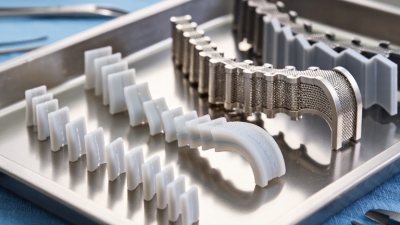
The 2026 Cervical Spacer market is entering a more demanding phase. Global buyers now expect dependable implants, traceable materials, and evidence beyond attractive product brochures. Grand View Research’s recent spinal implants analysis identifies aging populations, degenerative cervical disorders, and surgical technology adoption as major growth drivers. MarketsandMarkets also projects continued expansion across the global spinal implants sector, although estimates differ by product definition and regional coverage. That difference matters. A Cervical Spacer is not simply a small implant placed between vertebrae. Its height, footprint, lordotic angle, radiolucency, and fixation design can influence surgical handling and postoperative assessment. PEEK may support radiographic visibility, while porous titanium can encourage bone integration. However, material claims need clinical context. Laboratory performance does not automatically equal better patient outcomes. Dr. K. Daniel Riew, a leading cervical-spine surgeon, has stated, “The goal of cervical spine surgery is to decompress the spinal cord and nerve roots.” This principle should guide every supplier comparison. Buyers should examine published clinical evidence, quality systems, sterilization controls, complaint histories, and long-term follow-up data. They should also verify whether a manufacturer’s product range matches local registration requirements and hospital workflows. This guide reviews the 2026 Top Cervical Spacer Manufacturers for Global Buyers. It considers manufacturing capacity, design consistency, regulatory transparency, surgeon feedback, and supply reliability. Price remains relevant, but it can hide costs linked to revisions, delays, or inconsistent sizing. Some market rankings remain imperfect because companies report limited segment data. That limitation deserves attention, not concealment. Reliable sourcing begins with careful questions, measurable evidence, and realistic expectations.
Read more »
Charlotte By:Charlotte - October 16, 2026
Top 10 Cervical Plates Manufacturers for Global Buyers

Top 10 Cervical Plates Manufacturers for Global Buyers

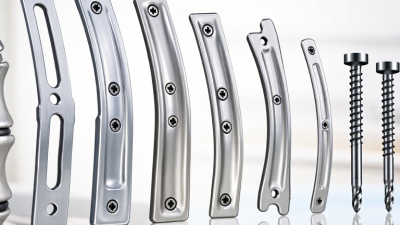
Choosing reliable Cervical Plates manufacturers requires more than comparing catalog photos and quoted prices. Global buyers need evidence on fixation design, material traceability, sterilization controls, clinical experience, and regulatory documentation. A polished website is not proof of quality. Industry data supports careful screening. Grand View Research’s 2024 analysis of cervical interbody fusion devices reports continued market expansion, driven by degenerative disc disease, aging populations, and improved surgical technologies. Fortune Business Insights also identifies spinal implants as a growing orthopedic segment, with hospitals demanding stronger outcomes and supply reliability. These reports do not measure every cervical plate directly. That limitation matters. K. Daniel Riew, MD, a widely published cervical-spine surgeon, has emphasized, “The most important thing is to decompress the spinal cord and nerve roots.” His point keeps the discussion grounded. A plate is not a substitute for surgical judgment, anatomical planning, or patient selection. This guide evaluates ten manufacturers serving international buyers. It considers product range, screw-plate integration, imaging compatibility, quality systems, documentation, distribution support, and published clinical evidence. ISO 13485 certification, CE or applicable market authorization, and transparent technical files deserve close attention. Yet certification alone cannot predict every clinical result. No ranking is perfect. Supplier performance can vary by region, distributor, and production batch. Some manufacturers provide impressive engineering but limited follow-up data. Others offer strong documentation but weaker local service. Buyers should verify current approvals, surgeon feedback, warranty terms, and post-market surveillance before purchasing Cervical Plates. Small details matter, especially when a device must fit precisely inside a crowded operating field.
Read more »
Charlotte By:Charlotte - October 11, 2026
Top Cortical Screws Manufacturers for Global Buyers

Top Cortical Screws Manufacturers for Global Buyers

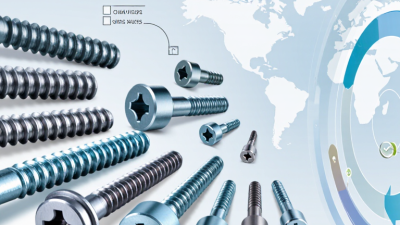
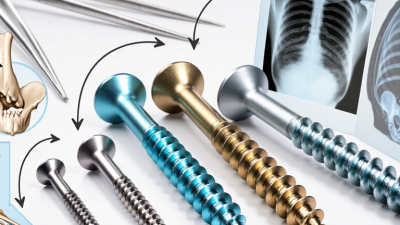
Choosing reliable Cortical Screws manufacturers requires more than comparing prices or polished catalog photographs. Buyers must examine thread geometry, core diameter, alloy grade, surface finish, packaging, and traceability. A screw may look precise under bright factory lighting, yet fail procurement review if its inspection records are incomplete. The global orthopedic devices market remains substantial. Fortune Business Insights valued it at approximately USD 47 billion in 2023, while Grand View Research reported a similar scale, with steady growth expected through the decade. These reports group trauma fixation products within broader orthopedic categories. They do not isolate Cortical Screws perfectly. That limitation matters. Orthopedic trauma specialist Dr. Stephan Perren has stated, “The function of internal fixation is to preserve fracture biology and provide sufficient stability for healing.” This principle should guide supplier evaluation. Manufacturer capability is not proven by volume alone. It depends on validated machining, fatigue testing, sterilization controls, and consistent documentation. For global buyers, practical checks include ISO 13485 certification, ASTM F543 testing, material certificates, lot-level records, and regulatory-market experience. A dependable supplier should explain how it controls thread accuracy and prevents burrs around the screw head. Small details matter in real operating rooms. Some sourcing teams still overvalue unit cost. That is understandable, but incomplete. A lower quotation can conceal inspection delays, inconsistent packaging, or expensive requalification work. The strongest manufacturers combine engineering discipline with responsive communication. They also acknowledge product limits instead of promising universal performance. This guide examines leading Cortical Screws manufacturers through quality systems, production capacity, customization, compliance support, and buyer feedback. Availability may change by region. Verify every claim before placing an order.
Read more »
Charlotte By:Charlotte - October 6, 2026
How to Choose Cancellous Screws in 2026?

How to Choose Cancellous Screws in 2026?

Choosing Cancellous Screws in 2026 requires more than comparing product catalogs or selecting the largest available diameter. Surgeons must assess bone quality, fracture pattern, thread design, screw length, head profile, and the expected mechanical load. A screw placed in soft metaphyseal bone behaves differently from one placed near a dense cortical zone. Small details matter. Thread purchase can determine stability. Orthopedic trauma expert Dr. Stephan Perren emphasized a principle widely used in fracture care: “The implant must be adapted to the biological and mechanical conditions of the fracture.” That idea remains highly relevant when selecting Cancellous Screws for the femur, tibia, ankle, wrist, or pelvic region. Current decisions should also consider imaging quality, patient age, osteoporosis risk, surgical access, and implant compatibility. A longer screw is not always better. A wider screw may improve purchase, but it can also compromise surrounding bone or limit placement options. In clinical practice, experienced teams often compare radiographs with three-dimensional imaging before final selection. They check whether the threads will cross the intended fragment and whether the screw can achieve compression without damaging the joint surface. This step is easy to underestimate. I have also found that catalog specifications cannot replace direct surgical judgment. Manufacturing quality, validated testing, traceability, and regulatory documentation deserve equal attention. No single screw suits every fracture. The best choice is the one that matches anatomy, biology, loading conditions, and the surgeon’s verified technique. Mistakes remain possible, so careful reassessment should be part of the plan.
Read more »
Charlotte By:Charlotte - October 1, 2026
How to Choose an External Fixator in 2026?

How to Choose an External Fixator in 2026?

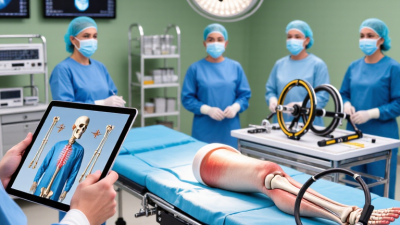
Choosing an External Fixator in 2026 requires more than comparing frame designs or counting available components. The correct choice depends on fracture pattern, soft-tissue condition, bone quality, patient mobility, and surgical objectives. A frame standing beside the operating table may look efficient, yet its real value appears around the patient’s leg, pin sites, and daily routine. Dr. Gavriil A. Ilizarov, the pioneer of modern circular fixation, stated, “The tension-stress effect is a biological law that governs the regeneration of tissues.” His principle still influences contemporary External Fixator planning. Modern systems now offer lighter materials, computer-assisted alignment, improved clamps, and patient-specific configurations. However, technology cannot replace clinical judgment. A surgeon must assess safe corridors, neurovascular risks, expected loading, and the patient’s ability to manage cleaning and follow-up care. This guide examines how to compare circular, unilateral, hybrid, and computer-assisted frames. It considers stability, adjustability, radiographic access, comfort, assembly time, and long-term maintenance. It also asks an uncomfortable question: is the most advanced frame always the best option? Usually, no. A simpler construct may provide safer handling and clearer instructions. Conversely, a complex deformity may require precise multiplanar control. No checklist is flawless. Swelling can change, compliance can disappoint, and a technically elegant frame can become impractical at home. Reliable selection therefore combines published evidence, experienced surgical assessment, manufacturer instructions, and honest discussion with the patient. In 2026, the best External Fixator is not merely innovative. It is appropriate, measurable, and manageable.
Read more »

Charlotte By:Charlotte - September 21, 2026
China Top Enders Nails Manufacturers and Suppliers

China Top Enders Nails Manufacturers and Suppliers

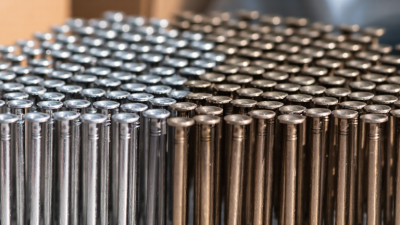
Choosing reliable Enders Nails manufacturers and suppliers requires more than comparing prices or counting product lines. Buyers must examine steel grade, shank accuracy, head shape, coating consistency, and packaging quality. A dependable supplier should provide clear specifications, batch traceability, inspection records, and practical guidance for different construction environments. Fastener expert John H. Bickford offers a useful principle: “The quality of a fastener depends on the quality of its design, material, and manufacture.” This idea remains relevant when evaluating Enders Nails for framing, carpentry, pallets, or general industrial use. A nail may look flawless under warehouse lighting, yet inconsistent hardness can cause bending during driving. Poor coating may also create rust marks around exposed joints. Small details matter. Leading manufacturers usually combine controlled wire drawing, precision forming, heat treatment, and reliable surface finishing. Suppliers should explain these processes without hiding behind vague claims. Product samples can reveal useful facts. Check the nail’s point, head seating, surface smoothness, and resistance to deformation. Ask whether production follows recognized quality systems and whether testing is performed consistently. No supplier is perfect. Even experienced manufacturers may face shipping delays, packaging errors, or regional material changes. That is why responsible buyers should compare records, communicate application requirements, and verify samples before large orders. The lowest quote can become expensive when nails split timber or interrupt production. A stronger selection process supports safer installations, steadier supply, and more credible long-term cooperation.
Read more »
Scarlett By:Scarlett - September 16, 2026
ENQUIRE NOW