

0%

Global sourcing Spinal Hooks in 2026 requires more than comparing prices or browsing supplier catalogs. These implants must support demanding spinal procedures, where geometry, fixation strength, and surgical handling directly affect clinical performance. Buyers should examine hook profiles, attachment methods, titanium or cobalt-chrome options, surface finish, and compatibility with the intended spinal system. Small differences matter. A few millimeters can influence rod alignment and operative efficiency.

Dr. Lawrence G. Lenke, a respected spinal deformity surgeon, has emphasized this practical principle: “The goal is balanced correction, not correction at any cost.” That idea should guide every sourcing decision. A reliable supplier should provide traceable materials, validated manufacturing processes, inspection records, and clear quality documentation. Buyers should also review applicable medical-device registrations, technical files, sterilization information, and post-market support. These details may seem slow. They protect the purchasing decision.

Supplier audits should include factory capacity, CNC equipment, inspection routines, packaging controls, and change-management procedures. Request samples before approving a large order. Test fit, finish, dimensions, and instrument compatibility with qualified clinical and engineering teams. Price remains important, but the lowest quotation can hide higher verification costs. That risk deserves honest attention.

No sourcing checklist is flawless. Forecasts may change, and a trusted supplier may still experience delays. A strong global strategy therefore combines documented evidence, technical judgment, and practical communication. The best Spinal Hooks partner is not merely inexpensive. It is consistent, transparent, responsive, and capable of supporting safe, compliant supply throughout 2026.
How to Choose Spinal Hooks for Global Sourcing in 2026?

What Are Spinal Hooks and How Are They Used?

How to Choose Spinal Hooks for Global Sourcing in 2026?

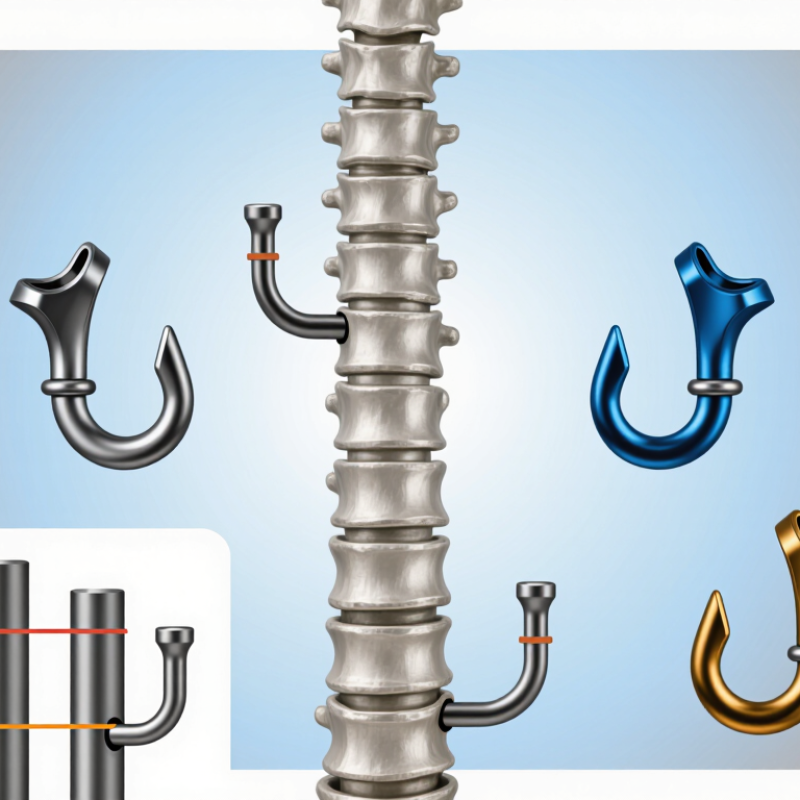
Spinal hooks are fixation components used during posterior spinal surgery. They grip selected posterior spinal structures and connect with rods. Surgeons may use laminar, pedicle, or transverse-process hooks. Each design creates different fixation behavior. Placement depends on anatomy, stability needs, imaging, and surgical technique. The choice is never only about price.

For global sourcing, begin with material traceability. Common options include titanium alloys and implant-grade stainless steel. Review fatigue data, pull-out testing, surface finish, and corrosion resistance. Ask suppliers for ISO 13485 certification, ISO 10993 biological evaluation, and ISO 14971 risk documentation. Certification supports quality systems, but it does not prove every hook performs clinically. The WHO Global Patient Safety Report 2024 states that around one in ten patients experiences harm in healthcare. Small sourcing gaps can become serious clinical risks. OECD Health at a Glance 2023 reported average health spending at 9.2% of GDP across OECD countries in 2022, increasing pressure to control cost without weakening verification.

Tips: Request lot-level certificates, dimensional inspection records, and sterilization validation. Check rod compatibility before approving samples. Test packaging after simulated transport. Do not trust a polished catalog alone. I have seen specifications look complete, yet thread tolerances remained unclear. That deserves a second review. Also confirm local registration, labeling, UDI obligations, and import rules before shipment.

How to Choose Spinal Hooks for Global Sourcing in 2026?

Approximate Young’s modulus of common spinal implant materials

Spinal hooks are fixation components used with rods to stabilize the spine. They may be positioned around the lamina or transverse process and are commonly used in posterior spinal constructs. Material selection affects stiffness, weight, imaging considerations, corrosion resistance, and manufacturing requirements. The values shown are approximate room-temperature engineering values; exact properties vary with alloy grade, heat treatment, and applicable medical-device standards.

Which Spinal Hook Types Fit Different Surgical Applications?

When choosing spinal hooks for global sourcing in 2026, match the hook design to the surgical application, anatomy, and planned construct. Laminar hooks can support posterior thoracic or lumbar fixation when the lamina offers suitable bone quality and exposure. Pedicle hooks may improve control near the pedicle, but they demand precise anatomical assessment and compatible instrumentation. Cervical procedures often require smaller hooks, lower profiles, and careful protection of neural and vascular structures.

Transverse process hooks can help create segmental fixation in selected posterior constructs. Sublaminar hooks may distribute load across the lamina, although insertion requires disciplined tissue handling and clear visualization. Double or offset hooks can improve rod alignment when the entry angle is challenging. In practical evaluations, surgeons should review hook geometry, contact surfaces, locking reliability, and compatibility with the complete system. A small mismatch can delay the procedure.

Tips: Request dimensional drawings, material certificates, fatigue data, sterilization guidance, and traceability records. Confirm that testing reflects the intended spinal region and loading conditions. Ask experienced surgeons to assess trial instruments, not only catalog images. A hook that looks efficient on paper may feel awkward in a narrow field. Sourcing teams should also verify regulatory documentation for each target market, because approval pathways and labeling requirements differ. Do not treat low price as clinical value. Reassess the choice when anatomy, bone quality, or surgical access changes.

How to Evaluate Materials, Design, and Manufacturing Quality

How to Choose Spinal Hooks for Global Sourcing in 2026?

When sourcing spinal hooks, material verification should begin with documents, not promises. Request the alloy designation, heat number, mill certificate, and complete lot traceability. Implant-grade titanium alloy offers low weight and strong corrosion resistance. Stainless steel may suit selected applications, but corrosion testing remains essential. Check chemical composition against the approved specification. Ask for fatigue, tensile, and corrosion data from representative production lots. Biocompatibility evidence should cover the finished surface, not only the raw metal.

Design review needs clinical realism. The hook should match laminar anatomy without forcing excessive insertion pressure. Smooth transitions matter. Inspect the inner radius, tip geometry, locking interface, and instrument engagement. Confirm imaging clearance and compatibility with the intended construct. Digital models and finite-element analysis can reveal stress concentration, but physical fatigue testing remains necessary. Worst-case sizes deserve special attention. They often expose weaknesses first.

Manufacturing quality is visible in small details. Measure critical dimensions with calibrated equipment, then review sampling plans and acceptance limits. Examine machining marks, burr removal, surface treatment, cleaning, and protective packaging. A polished sample can hide inconsistent production. That is an uncomfortable possibility. Audit process validation, equipment maintenance, operator training, and nonconformance records. ISO 13485-based controls are useful, but a certificate alone cannot prove dependable hooks. Ask to inspect batch records and retain samples. Keep supplier communication documented across languages, sites, and time zones.

What Standards and Certifications Should Global Buyers Check?

Global buyers should treat spinal hooks as implantable medical devices, not ordinary machined parts. MarketsandMarkets’ 2024 report projects the spinal implants market to grow from about USD 11.7 billion in 2024 to USD 16.8 billion by 2029. This expansion increases supplier choice, but also raises verification risks. In practical sourcing reviews, ISO 13485 certification is the starting point. Check the certificate scope, manufacturing site, expiry date, and covered product family. A certificate alone proves little.

Ask for an ISO 14971 risk-management file and biological evaluation evidence under ISO 10993. Mechanical testing should reflect the hook’s intended anatomy and loading. ASTM F1717 is widely used for spinal construct testing, while ISO 14630 addresses general implant requirements. Test reports should come from laboratories accredited to ISO/IEC 17025. Small details matter. Check raw-material certificates, heat-treatment records, surface-finish controls, and lot traceability.

Regulatory evidence must match the destination market. For Europe, verify compliance with Regulation (EU) 2017/745, including technical documentation and post-market surveillance. For the United States, confirm the applicable FDA pathway rather than accepting a generic “FDA registered” claim. Sterilization validation may require ISO 11135 or ISO 11137, and packaging should meet ISO 11607 where applicable. Buyers sometimes overlook supplier-change controls. That is a mistake. Even a polished audit can miss inconsistent inspection sampling, so request recent nonconformance records and independent test results before approving production.

How to Choose Spinal Hooks for Global Sourcing in 2026? - What Standards and Certifications Should Global Buyers Check?

Global sourcing checklist for spinal hooks and related spinal fixation components
Evaluation Dimension What Buyers Should Verify Relevant Standard, Regulation or Certification Evidence to Request Recommended Acceptance Criteria Sourcing Risk if Not Verified
Intended Use and Device Classification Confirm whether the hook is intended for thoracic, lumbar, or other spinal fixation, and whether it is supplied as a standalone component or as part of a complete system. EU Regulation (EU) 2017/745; applicable national medical-device rules; United States classification and premarket requirements under the Federal Food, Drug, and Cosmetic Act. Intended-use statement, device classification rationale, technical documentation index, market-specific registration or clearance records where applicable. The intended use, anatomical indication, fixation method, and regulatory pathway should be consistent across labels, drawings, test reports, and quality documents. A product may be legally unsuitable for the target market even when its material and dimensions appear acceptable.
Quality Management System Assess control of design, purchasing, production, process validation, nonconforming product, corrective action, and complaint handling. ISO 13485:2016 for quality management systems used by medical-device organizations. Current ISO 13485 certificate, certification scope, issuing certification body, audit status, site address, and certificate validity dates. The certificate should cover the actual manufacturing site and the relevant activities, such as design, machining, finishing, assembly, or distribution. Weak process control, incomplete records, inconsistent batches, and difficulty supporting regulatory audits.
Risk Management Check whether hazards such as hook migration, laminar damage, fatigue fracture, corrosion, particulate release, and incorrect assembly have been assessed. ISO 14971:2019 for application of risk management to medical devices. Product risk-management file summary, hazard analysis, risk controls, verification evidence, and residual-risk evaluation. Risk controls should be traceable to design inputs, validation tests, inspection criteria, instructions for use, and post-market monitoring. Important clinical and mechanical hazards may remain unidentified or insufficiently controlled.
Material Grade and Chemical Composition Verify the exact alloy, heat or lot traceability, chemical composition, mechanical properties, and compatibility with the intended implant system. ISO 5832-1 for wrought stainless steel; ISO 5832-3 for wrought titanium 6-aluminium 4-vanadium alloy; other material standards may apply according to the selected alloy. Material certificate, chemical analysis, mechanical test results, heat-treatment records, and lot-to-lot traceability. The material designation on the certificate, drawing, label, and purchase order should be identical and supported by independent or validated testing. Incorrect alloy, reduced fatigue performance, galvanic incompatibility, or unexpected corrosion behavior.
Dimensional Accuracy and Fit Review hook opening, throat depth, rod diameter compatibility, connection interface, left/right orientation, radii, edge geometry, and tolerance stack-up. Approved engineering drawing and validated inspection methods; applicable implant-system interface specifications. Controlled drawings, dimensional inspection reports, calibrated equipment records, first-article inspection, and sampling plan. All critical-to-function dimensions should have defined tolerances, objective inspection methods, and documented release criteria. Poor fit, intraoperative difficulty, incomplete locking, tissue irritation, or incompatibility with mating components.
Mechanical Performance Evaluate static strength, pull-off or disengagement resistance, deformation, fatigue behavior, and construct performance under clinically relevant loading. ASTM F1798 for evaluating spinal rod systems and their components; other applicable ASTM or ISO methods should be selected according to the hook design and construct. Validated test protocol, sample configuration, load conditions, number of specimens, failure modes, raw data, and final report. Testing should use the final production design and the actual mating components, with acceptance limits justified by risk assessment and intended use. Fatigue fracture, deformation, loss of fixation, or misleading results from testing an incomplete construct.
Biocompatibility Assess biological risks from the finished hook, including material, residues, surface treatment, manufacturing chemicals, and sterilization effects. ISO 10993-1 and other applicable parts of the ISO 10993 series, selected through a risk-based biological evaluation. Biological evaluation plan and report, material characterization, chemical-residue data, cytotoxicity or other applicable test reports, and justification for omitted tests. Evidence should represent the final finished, cleaned, passivated or coated, and sterilized product condition where relevant. Adverse tissue response, contamination concerns, regulatory nonconformity, or expensive retesting after import.
Surface Treatment and Corrosion Control Confirm surface roughness, passivation, anodizing, coating, burr removal, cleanliness, and resistance to corrosion or wear particles. Applicable material and surface-treatment specifications; ASTM F86 may be relevant for metallic surgical implants and surface preparation, depending on the process. Process validation, surface inspection results, corrosion or coating tests where applicable, residue limits, and cleaning validation. Surface requirements should be defined for functional areas, with no sharp burrs, visible contamination, flaking, or uncontrolled coating defects. Corrosion, particulate generation, poor locking performance, or increased biological risk.
Cleaning, Packaging and Sterilization Determine whether the hook is supplied sterile or non-sterile and verify cleaning, packaging integrity, shelf life, and sterilization validation. ISO 11607 for packaging for terminally sterilized medical devices; ISO 11135 for ethylene oxide, ISO 11137 for radiation, or ISO 17665 for moist heat, as applicable. Cleaning validation, sterilization validation, packaging validation, seal-strength and integrity testing, shelf-life data, and environmental monitoring records. The validated process should cover the exact product configuration, packaging materials, sterilization load, and labeled shelf life. Sterility failure, damaged packaging, excessive residues, shortened shelf life, or import-release delays.
Traceability and Unique Identification Verify traceability from raw material and processing records to finished product, packaging, shipment, and complaint history. ISO 13485 traceability requirements; applicable UDI requirements in the destination market; ISO/IEC 15459 may be relevant to identification systems. Lot or serial-number procedure, device master record, batch history, label samples, UDI or equivalent identification data, and recall procedure. Each shipment should be linked to the material lot, critical processes, inspection results, final release, and customer delivery records. Slow or incomplete recalls, inability to investigate defects, and noncompliance with market-specific identification rules.
MRI and Safety Labeling Confirm the declared MRI status and ensure that conditions for safe scanning are supported by evidence rather than assumed from the alloy alone. ASTM F2503 for marking medical devices and other items for safety in the magnetic resonance environment. MRI safety assessment, field-strength and scanning-condition limits, heating or displacement evaluation where applicable, and validated labeling. The MRI label should clearly state the supported conditions and match the technical file, instructions for use, and packaging. Incorrect clinical instructions, scanning restrictions, or safety concerns at hospitals using MRI equipment.
Regulatory Certificates and Market Access Check whether certificates cover the exact device, manufacturing site, intended market, and current regulatory transition requirements. EU MDR 2017/745 for European Union markets; destination-country medical-device regulations; United States premarket requirements where applicable. Declaration of conformity, applicable certificate from the required conformity-assessment body, registration records, labeling, and post-market surveillance procedure. Verify certificate scope, product family, risk class, legal manufacturer, authorized representative where required, expiry date, and database or issuing-body status. Customs detention, inability to place the device on the market, product withdrawal, or regulatory penalties.
Supplier Change Control Establish how changes to alloy source, machining equipment, surface treatment, packaging, sterilization, drawings, or subcontractors are controlled. ISO 13485 change-control and purchasing-control requirements; applicable regulatory notification or approval requirements. Written change-notification agreement, change-impact assessment, revalidation plan, approved subcontractor list, and sample retention procedure. No critical change should be implemented without prior written notification, risk assessment, and buyer approval when contractually required. Unapproved design drift, inconsistent performance, invalidated certificates, or loss of regulatory conformity.
Buyer Audit and Sample Qualification Use document review, factory audit, first-article inspection, and independent laboratory testing before approving regular production. ISO 19011 provides guidance for auditing management systems; the buyer should also define product-specific qualification requirements. Audit report, corrective-action plan, first-article report, independent test results, approved sample, and signed technical agreement. Production approval should follow closure or formal acceptance of critical audit findings and confirmation that samples match the controlled drawing. Paper compliance without reliable production capability, leading to rejected shipments or clinical-use concerns.
Buyer note: A standard or certificate does not automatically prove that a specific spinal hook is safe, compatible, or legally marketable. Always verify the certificate scope, product-specific test evidence, final configuration, manufacturing site, and destination-market requirements.

How to Compare Suppliers, Costs, and International Logistics

Choosing spinal hooks for global sourcing requires more than comparing unit prices. I would request material certificates, dimensional drawings, fatigue-test evidence, and ISO 13485 quality records. The supplier should also explain traceability from raw titanium or cobalt-chrome to final packaging. A 2024 medical-device market report by Fortune Business Insights placed spinal implant demand in a multi-billion-dollar global market, but market size does not prove supplier reliability. Audit the process.

Compare landed cost, not quotation cost. Include tooling, inspection, sterilization, insurance, customs brokerage, duties, and temperature-controlled storage when required. UNCTAD’s Review of Maritime Transport 2023 reported that shipping carries over 80% of global merchandise trade by volume. Sea freight may reduce cost, yet it can add weeks and port-transfer risks. Air freight is faster, but often damages the budget. Request three shipping scenarios, with clear Incoterms and delivery milestones.

Check logistics performance country by country. The World Bank’s Logistics Performance Index 2023 assessed 139 economies across customs, infrastructure, shipment arrangements, and timeliness. Use those categories during supplier scoring. Ask for shipment records, export documentation samples, and a contingency route. No spreadsheet catches every delay. I would reserve a small risk allowance, even when the purchasing team dislikes it. A cheaper hook can become expensive after one missing certificate, relabeling error, or delayed customs release. Supplier claims need evidence, not polished presentations.

FAQS

What are spinal hooks used for?

Spinal hooks are fixation components for posterior spinal surgery. They grip selected spinal structures and connect with rods.

Which spinal hook designs are commonly available?

Common designs include laminar, pedicle, and transverse-process hooks. Each design creates different fixation behavior.

How should buyers choose a spinal hook design?

Consider anatomy, stability needs, imaging requirements, rod compatibility, and surgical technique. Price alone is not enough.

Which materials are commonly used?

Titanium alloys offer low weight and corrosion resistance. Implant-grade stainless steel may suit selected applications.

What material documents should suppliers provide?

Request alloy designation, heat number, mill certificates, and complete lot traceability. Verify chemical composition against approved specifications.

What testing should support material and product quality?

Review fatigue, tensile, pull-out, corrosion, and biological evaluation data. Finished-surface evidence matters.

What design details require close inspection?

Check the inner radius, tip geometry, locking interface, and instrument engagement. Smooth transitions can reduce stress concentration.

Is digital modeling enough for design validation?

No. Finite-element analysis can identify risks, but physical fatigue testing remains necessary.

Which manufacturing details can reveal quality problems?

Inspect dimensions, burr removal, machining marks, surface treatment, cleaning, and protective packaging. Small defects matter.

What supplier records should buyers review?

Review process validation, equipment maintenance, operator training, nonconformance records, batch records, and retained samples.

Do quality certificates prove clinical performance?

No. Certification supports quality systems, but it does not prove every hook performs reliably in clinical use.

What should be checked before shipment?

Confirm local registration, labeling, unique device identification duties, import rules, and sterilization validation.

How can packaging quality be evaluated?

Test packaging after simulated transport. A clean sample may not represent real shipping conditions.

Why does rod compatibility require early confirmation?

An incompatible locking interface can disrupt the intended construct. Check it before approving samples.

What sourcing problem deserves extra reflection?

Specifications may look complete while thread tolerances remain unclear. That deserves a second review.

Conclusion

Choosing Spinal Hooks for global sourcing in 2026 requires a clear understanding of their role in spinal fixation and the surgical applications they support. Buyers should compare hook types according to anatomy, fixation requirements, surgical approach, and compatibility with related implants. Careful evaluation of materials, structural design, surface finish, dimensional accuracy, and manufacturing controls is essential for consistent performance and dependable clinical use. Quality systems, traceability, testing records, and relevant international standards or certifications should also be reviewed before supplier approval.

A reliable sourcing strategy should assess supplier experience, production capacity, quality consistency, customization capabilities, lead times, and total landed cost rather than focusing only on unit price. Buyers should request detailed technical documentation, inspection procedures, sample evaluations, and transparent communication about packaging, shipping, customs requirements, and after-sales support. By balancing design suitability, verified quality, regulatory readiness, cost efficiency, and international logistics, global purchasers can build a more secure and sustainable supply chain for Spinal Hooks.

Scarlett

Scarlett

Scarlett is a dedicated marketing professional with a profound expertise in the company’s product offerings. With a passion for effective communication and a keen understanding of market trends, Scarlett plays a pivotal role in crafting high-quality, informative blog articles that are regularly......
ENQUIRE NOW