
Expert articles, clinical developments, and innovation trends in orthopedic implants and trauma fixation.
In-depth coverage on biocompatible materials, implant engineering, and modern surgical techniques.
Choosing the best Orthopedic Staple for global buyers requires more than comparing prices or catalog images. Hospitals need dependable fixation, predictable handling, and documentation that survives regulatory review. A staple may look excellent in a product photograph, yet its real value appears during insertion, under imaging, and after sterilization. Small details matter. Leg geometry, alloy selection, surface finish, and closing force can influence surgical confidence.
Experienced buyers usually examine the complete product system. They review material certificates, dimensional tolerances, biocompatibility evidence, sterilization validation, and packaging integrity. They also confirm whether the staple suits the intended procedure, bone quality, and surgical instruments. A batch arriving with bent legs or unclear labels can disrupt an operating schedule quickly. That risk deserves attention.
Global purchasing adds another layer of complexity. Requirements differ across regions, even when clinical expectations seem similar. Buyers should verify applicable registrations, quality-management certifications, traceability procedures, and post-market support. Independent testing can strengthen supplier claims, but no document replaces careful technical evaluation. Some suppliers provide impressive data, while offering limited answers about complaints or replacement policies. That is a warning sign.
There is no universal winner. A titanium model may support specific imaging or corrosion preferences, while stainless steel may offer a different balance of strength and cost. The correct choice depends on validated clinical use, not marketing language. Product trials should involve surgeons, procurement teams, and regulatory specialists. Their feedback may reveal uncomfortable gaps. That is useful.
This guide explores the practical criteria global buyers can use when comparing an Orthopedic Staple, from material and design to compliance, supply reliability, and long-term manufacturer credibility.
What Is the Best Orthopedic Staple for Global Buyers?
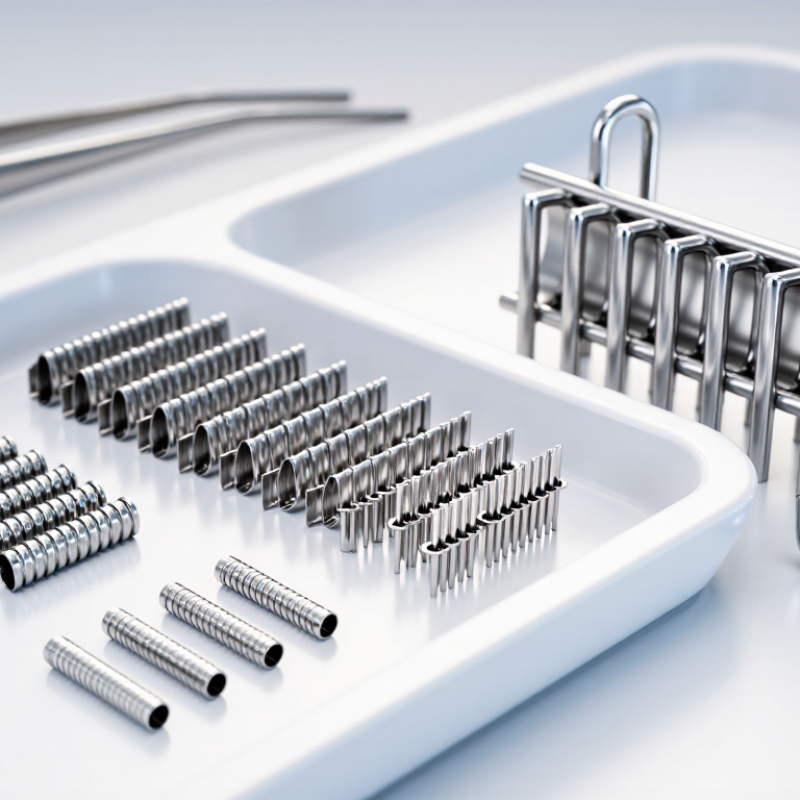
An orthopedic staple is a small implant used to stabilize selected bone fractures or fusion sites. Its legs enter prepared bone channels and maintain pressure across the repair area. This compression can reduce movement while new bone develops. Some staples use shape-memory metal, allowing controlled closure after placement. Others depend on fixed geometry and surgical positioning. The best choice depends on bone quality, anatomy, fracture pattern, and the surgeon’s technique. It is not simply the strongest staple. Fit matters more.
Tips: Check the staple’s dimensions, compression behavior, material, and insertion method. Review sterile packaging, batch traceability, and technical documentation before purchase. Confirm that the instruments match the implant system. Imaging compatibility also deserves attention. A small mismatch can create avoidable delays during surgery. Global buyers should verify current regulatory requirements in the destination market.
A practical evaluation should include handling details. Can the staple remain stable when the bone surface is uneven? Does the delivery instrument provide clear tactile feedback? Is the package easy to inspect without damage? These questions often reveal weaknesses that product tables miss. A perfect specification sheet does not guarantee a perfect clinical result. Bone density, surgeon experience, and patient biology still influence repair. That limitation deserves honest consideration.
An orthopedic staple is a U-shaped implant used to compress and stabilize bone fragments, osteotomy sites, or fusion areas. Stable compression helps limit micromotion so the bone can progressively bridge the repair site. Material selection is application-specific: titanium alloys are lighter and generally more compatible with imaging, while stainless steel provides high strength and is widely used in fixation systems. The density values shown are typical reference values and vary by alloy grade and manufacturing condition.
Material choice strongly affects an orthopedic staple’s strength, flexibility, corrosion resistance, and tissue compatibility. Nitinol is widely considered for compression staples because it has shape-memory behavior. It can apply continuous compression as bone healing progresses. However, its performance depends on accurate heat treatment and strict process control.
Titanium alloys offer a useful balance between strength, low weight, and biocompatibility. They also create fewer imaging artifacts than some steel options. Stainless steel remains attractive for buyers who prioritize mechanical strength and cost control. Yet, corrosion resistance, surface finishing, and possible imaging interference require careful review. Cobalt-chromium alloys may provide high strength, but their stiffness can be unsuitable for some fixation needs. No material wins every case.
Tips: Ask for verified material certificates, fatigue-test results, surface-treatment details, and batch traceability. Confirm whether the staple is compatible with the planned sterilization method and imaging environment. Suppliers should explain how they control nickel release, dimensional accuracy, and shape-memory performance. These details often matter more than a polished product description.
Global buyers should also examine manufacturing experience and quality systems. ISO 13485 certification can support process reliability, but certification alone proves little about daily execution. Request technical drawings, inspection records, and packaging validation. A simple ranking of materials is tempting, but it can mislead. Surgical site, bone quality, loading pattern, and surgeon preference must guide the final decision.
Choosing the best orthopedic staple begins with the surgical task, not the catalogue price. A staple for a small hand procedure may differ greatly from one used in knee or spinal surgery. Compare leg length, crown shape, wire diameter, and closing force. Measure the tissue thickness carefully. A poor fit can cause instability, pressure, or delayed healing.
Material selection also deserves close attention. Titanium may support imaging compatibility, while stainless steel can offer familiar handling and strength. However, surgeons should review clinical evidence, corrosion resistance, and tissue response for each indication. Delivery matters too. Check whether the applicator provides controlled deployment and clear tactile feedback. Small details matter. One awkward trigger can affect placement accuracy.
Global buyers should examine sterilization validation, packaging integrity, lot traceability, and shelf-life documentation. Confirm that the product meets the destination market’s medical-device requirements. Local surgical training and replacement-part access can influence practical value. A low purchase price may hide higher costs from difficult handling or inconsistent supply. Some comparisons remain imperfect because laboratory strength does not fully represent living bone, swelling, or surgeon technique. Ask for independent test data, but question how closely those tests match real procedures. A careful clinical review may reveal that the most expensive staple is not always the most suitable choice.
| Staple Type | Common Material | Typical Compression Behavior | Best-Fit Surgical Needs | Common Anatomical Applications | Radiographic Visibility | MRI Considerations | Corrosion and Biocompatibility Profile | Typical Dimensional Options | Key Advantages | Important Limitations | Global-Buyer Evaluation Priority |
|---|---|---|---|---|---|---|---|---|---|---|---|
| Nitinol Shape-Memory Staple | Nickel-titanium alloy | Provides sustained compression as the staple attempts to return to its programmed shape after insertion. | Compression arthrodesis and fixation where continuous compressive force is desired. | Foot and ankle fusions, small-joint arthrodesis, osteotomy fixation, and selected fracture applications. | High; the metal implant is visible on standard radiographs. | Usually available in MRI-conditional configurations, but exact conditions depend on the device design and labeling. | Generally strong corrosion resistance and established orthopedic use; nickel sensitivity and patient history should be considered. | Commonly offered with bridge widths approximately 8–25 mm and leg lengths approximately 10–30 mm; exact sizes vary by system. | Continuous compression, relatively low profile, and useful fixation across small fusion sites. | Requires correct activation, bone preparation, and insertion technique; excessive compression may be unsuitable for fragile bone. | Verify alloy composition, nickel disclosure, compression testing, MRI labeling, and instrument compatibility. |
| Rigid Stainless-Steel Staple | Implant-grade stainless steel, commonly austenitic stainless steel | Provides immediate mechanical compression through staple geometry and insertion force; compression is generally not self-adjusting. | Routine fixation requiring high rigidity and predictable mechanical strength. | Small-bone fractures, osteotomies, foot and ankle procedures, and selected joint fusions. | High; clearly visible on radiographs. | MRI status must be confirmed for the specific implant and configuration; stainless-steel composition can affect artifact and magnetic behavior. | Good strength and corrosion resistance when manufactured to implant standards; surface finish and alloy grade are important. | Commonly available in several bridge widths and leg lengths, often covering small to medium fixation sites. | High strength, broad availability, and generally favorable cost efficiency. | May create more imaging artifact than some alternatives; does not provide active continuous compression after implantation. | Check material standard, fatigue performance, sterilization status, corrosion testing, and local regulatory clearance. |
| Titanium or Titanium-Alloy Staple | Commercially pure titanium or titanium alloy | Provides immediate fixation and compression through mechanical geometry; performance depends on staple design and bone quality. | Patients who may benefit from a lightweight implant and reduced MRI artifact compared with some steel designs. | Foot and ankle reconstruction, osteotomy fixation, small-joint fusion, and selected trauma procedures. | Moderate to high; visible on radiographs, although imaging artifact is often lower than with stainless steel. | Many titanium implants are MRI-conditional, but the exact field strength, scanning conditions, and labeling must be checked. | High biocompatibility and strong corrosion resistance; titanium is widely used in orthopedic implants. | Often available in small, medium, and larger bridge widths with multiple leg lengths for different bone thicknesses. | Low density, favorable biocompatibility, and generally reduced susceptibility artifact compared with some steel implants. | May have different stiffness and bending characteristics from stainless steel; higher material cost is common. | Confirm alloy grade, mechanical strength, MRI conditions, surface treatment, and compatibility with delivery instruments. |
| Absorbable Polymer Staple | Biodegradable polymer, such as a lactide- or glycolide-based material | Provides temporary fixation while gradually losing strength as the material hydrolyzes and is absorbed. | Selected low-load fixation cases where permanent metal retention is undesirable. | Some small-bone and soft-tissue-related orthopedic procedures, depending on the approved indication and material strength. | Low or limited; some designs may require radiopaque markers or alternative imaging for localization. | Generally produces minimal metal-related MRI artifact, but the specific device and any marker material must be reviewed. | Designed for gradual degradation; local inflammatory response and degradation behavior depend on polymer type, size, and patient factors. | Usually offered in smaller dimensions than metal staples; available size and strength ranges are more indication-specific. | No permanent metal implant, minimal metal artifact, and gradual material resorption. | Lower initial strength than many metal staples, time-dependent strength loss, and limited suitability for high-load or unstable fixation. | Review degradation timeline, residual strength, approved indications, sterilization method, and clinical evidence. |
| Low-Profile Compression Staple | Usually titanium, titanium alloy, stainless steel, or nitinol | Compression is generated by the selected material and staple geometry while minimizing prominence above the bone surface. | Anatomical areas with limited soft-tissue coverage or a high risk of implant prominence. | Forefoot, midfoot, hindfoot, ankle, and other areas where soft-tissue irritation is a concern. | High for metal versions; visibility depends on the material and imaging technique. | Follow the exact MRI labeling for the selected material and design. | Depends on the metal or polymer used; polished surfaces and smooth edges can help reduce soft-tissue irritation. | Often uses reduced crown height with several bridge widths and leg lengths matched to bone dimensions. | Reduced prominence, potentially improved soft-tissue comfort, and better fit in anatomically constrained locations. | Lower profile should not compromise insertion strength, load capacity, or adequate bone purchase. | Compare crown height, edge design, insertion depth, driver access, and biomechanical test data. |
| Wide-Bridge or High-Strength Staple | Usually nitinol, titanium alloy, or stainless steel | Provides a wider load-distribution footprint and may improve resistance to rotation or pullout when appropriately sized. | Larger fusion surfaces, osteotomies, and fixation sites exposed to higher mechanical demands. | Midfoot and hindfoot arthrodesis, larger osteotomies, and selected periarticular fixation procedures. | High for metal designs. | Confirm the specific MRI conditions, particularly for larger metal implants and multi-staple constructs. | Depends on the selected alloy; implant-grade titanium, stainless steel, and nitinol have established orthopedic applications. | Bridge widths commonly extend beyond small-joint sizes, with leg lengths selected according to cortical thickness and surgical approach. | Broader contact area, improved construct stability potential, and flexibility for larger fixation sites. | Requires adequate bone stock and sufficient surgical exposure; may be unsuitable for small or thin bones. | Assess fatigue strength, pullout resistance, construct compatibility, and availability of matching instruments. |
Selection note: The most appropriate orthopedic staple depends on the indication, bone quality, load environment, anatomy, soft-tissue coverage, desired compression behavior, imaging requirements, and applicable regulatory labeling. Dimensional ranges are representative market ranges rather than universal specifications; final selection should follow the device instructions for use and the surgeon’s clinical judgment.
The best orthopedic staple is not simply the strongest option. It must match the intended tissue, fixation load, and surgical environment. Buyers should verify alloy composition, corrosion resistance, fatigue performance, and biocompatibility under ISO 10993. Sharp edges and inconsistent leg geometry can damage tissue or reduce fixation stability. Small details matter.
Sterility requires documented validation, not attractive packaging. ISO 11135, ISO 11137, and ISO 17665 cover common sterilization methods, depending on the process. ISO 11607 addresses sterile barrier packaging. A validated process may target a sterility assurance level of 10−6, but this figure does not replace routine monitoring. WHO’s 2023 Patient Safety Fact Sheet reports that about one in ten patients experiences harm in healthcare. More than half of this harm is considered preventable. That makes traceability essential.
Regulatory expectations differ across markets. European submissions generally require conformity with Regulation (EU) 2017/745, while United States submissions may require an appropriate FDA pathway. Other countries often request local registration, authorized representatives, clinical evidence, and post-market surveillance records. Buyers should inspect the technical file, sterilization records, shelf-life data, complaint history, and unique device identification details. A certificate alone can mislead. I would also question suppliers that provide perfect documents but vague answers about batch-level traceability. Real quality systems sometimes show limitations, corrective actions, and thoughtful risk reviews. Those imperfections can reveal whether safety is genuinely managed.
What Is the Best Orthopedic Staple for Global Buyers?
How Buyers Can Evaluate Suppliers, Costs, and Product Quality
Selecting an orthopedic staple requires more than comparing unit prices. Buyers should examine material grade, dimensional accuracy, closing force, and corrosion resistance. Stainless steel or compatible implant alloys should have clear material documentation. Ask suppliers for inspection records, technical drawings, and batch traceability. Ask for evidence. A supplier’s quality system should support consistent production, not only attractive samples.
Request samples from different production batches when possible. Check staple legs, crown shape, surface finish, and packaging under practical handling conditions. For sterile products, review sterilization validation and package integrity data. Suppliers should explain manufacturing controls under recognized medical-device quality systems, such as ISO 13485, where applicable. Independent testing can verify mechanical performance and biocompatibility claims. Do not rely on certificates without checking their scope and validity.
Total cost includes tooling, testing, shipping, customs, storage, and inspection. Price alone misleads. A cheaper staple may create higher costs through inconsistent dimensions or damaged packaging. Compare delivery capacity, complaint handling, change-control procedures, and communication speed. A written specification protects both sides. Still, specifications can miss real clinical needs, so feedback from surgeons and operating-room staff matters. I would not treat one successful shipment as proof of long-term reliability. Recheck suppliers periodically, document nonconformities, and keep a realistic backup plan for supply interruptions.
Match staple size, leg length, crown shape, and closing force to tissue thickness and fixation load. A hand procedure needs different geometry than knee or spinal surgery.
Measure it carefully. A short staple may lack stability, while an oversized staple can create pressure or delay healing.
Titanium may support imaging compatibility. Stainless steel can provide familiar handling and strength. Review corrosion resistance, fatigue performance, and tissue response.
Check alloy composition, biocompatibility, sharp edges, and consistent leg geometry. Small defects can damage tissue or weaken fixation.
It is very important. Controlled deployment and clear tactile feedback can improve placement accuracy. One awkward trigger may matter.
Request validated sterilization records, routine monitoring results, packaging validation, and shelf-life data. Attractive packaging proves little.
Inspect sterile barrier integrity, seal quality, lot identification, and storage instructions. A damaged package should not be treated as reliable.
Yes. Buyers may need technical files, local registration, clinical evidence, authorized representatives, and post-market surveillance records.
No. Review batch-level traceability, complaint history, corrective actions, and unique device identification details. Perfect documents can still hide weak answers.
Not necessarily. Compare handling, supply reliability, clinical evidence, and replacement-part access. Laboratory strength cannot fully reproduce swelling, living bone, or surgeon technique.
An Orthopedic Staple is a surgical fixation device designed to help stabilize bone fragments, support alignment, and promote healing during orthopedic procedures. Its performance depends on factors such as shape, size, holding strength, flexibility, and compatibility with the targeted bone and surgical technique. Common manufacturing materials may include medical-grade stainless steel, titanium, and other biocompatible alloys, each offering different benefits in strength, corrosion resistance, imaging compatibility, and tissue tolerance.
For global buyers, selecting the best orthopedic staple requires a balanced review of clinical application, material quality, dimensional accuracy, packaging, sterility, and shelf life. Buyers should also confirm that products are supported by appropriate quality systems, technical documentation, and regulatory compliance for their intended markets. Supplier evaluation should include manufacturing capability, consistency between batches, inspection procedures, delivery reliability, and total purchasing cost rather than unit price alone. A careful comparison helps buyers choose safe, dependable, and cost-effective products for different surgical needs.