
Expert articles, clinical developments, and innovation trends in orthopedic implants and trauma fixation.
In-depth coverage on biocompatible materials, implant engineering, and modern surgical techniques.
The 2026 Cervical Spacer market is entering a more demanding phase. Global buyers now expect dependable implants, traceable materials, and evidence beyond attractive product brochures. Grand View Research’s recent spinal implants analysis identifies aging populations, degenerative cervical disorders, and surgical technology adoption as major growth drivers. MarketsandMarkets also projects continued expansion across the global spinal implants sector, although estimates differ by product definition and regional coverage.
That difference matters.
A Cervical Spacer is not simply a small implant placed between vertebrae. Its height, footprint, lordotic angle, radiolucency, and fixation design can influence surgical handling and postoperative assessment. PEEK may support radiographic visibility, while porous titanium can encourage bone integration. However, material claims need clinical context. Laboratory performance does not automatically equal better patient outcomes.
Dr. K. Daniel Riew, a leading cervical-spine surgeon, has stated, “The goal of cervical spine surgery is to decompress the spinal cord and nerve roots.” This principle should guide every supplier comparison. Buyers should examine published clinical evidence, quality systems, sterilization controls, complaint histories, and long-term follow-up data. They should also verify whether a manufacturer’s product range matches local registration requirements and hospital workflows.
This guide reviews the 2026 Top Cervical Spacer Manufacturers for Global Buyers. It considers manufacturing capacity, design consistency, regulatory transparency, surgeon feedback, and supply reliability. Price remains relevant, but it can hide costs linked to revisions, delays, or inconsistent sizing. Some market rankings remain imperfect because companies report limited segment data. That limitation deserves attention, not concealment. Reliable sourcing begins with careful questions, measurable evidence, and realistic expectations.
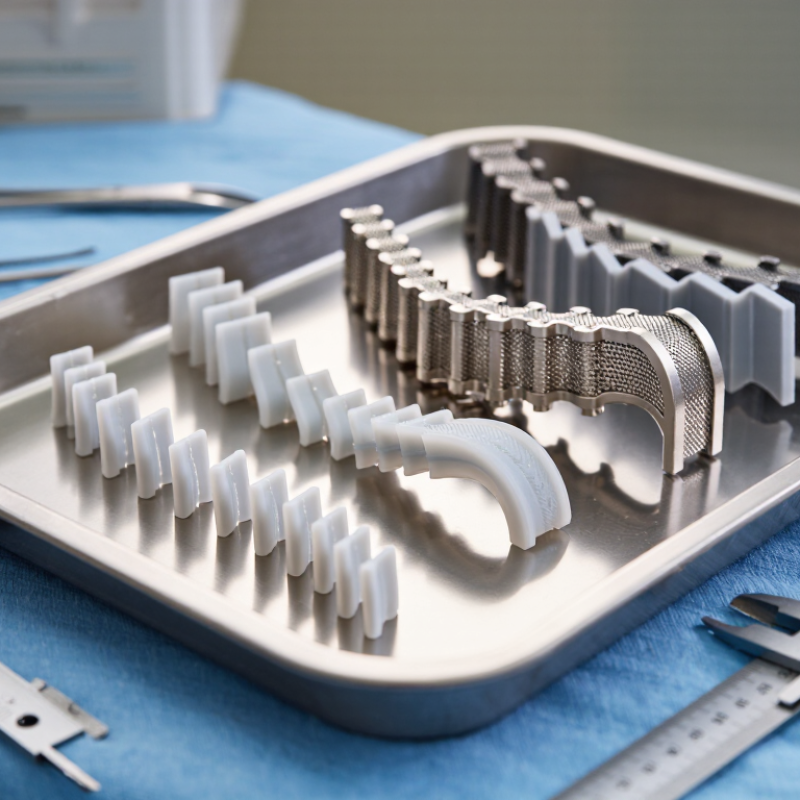
A cervical spacer is an implant placed between vertebral bodies after a damaged disc is removed. It helps restore disc height, support alignment, and encourage bone growth between adjacent vertebrae. Surgeons may use spacers for selected degenerative disc disease, instability, trauma, or nerve compression cases. Patient anatomy and symptoms must guide the decision.
Design affects both surgical handling and long-term performance. Common features include a central graft chamber, textured surfaces, radiographic markers, and endplates shaped for vertebral contact. Materials may include medical-grade polymers, titanium alloys, or ceramics.
Porous structures can support bone ingrowth, but they may complicate imaging interpretation. Fit matters. A spacer that is too tall can increase tension, while an undersized device may migrate or fail to restore stability.
Experienced buyers should examine dimensional options, sterilization records, traceability, testing data, and instructions for use. Manufacturing consistency is as important as an attractive design. Quality systems should cover raw materials, machining, surface treatment, packaging, and post-market monitoring. Clinical evidence deserves careful reading; laboratory results do not automatically predict patient outcomes.
Not always. Even experienced teams can underestimate variations in bone density, surgical approach, and healing speed. A reliable evaluation therefore includes surgeon feedback, imaging review, regulatory documentation, and transparent risk information before procurement.
2026 Top Cervical Spacer Manufacturers for Global Buyers
Key Criteria for Evaluating Cervical Spacer Manufacturers
Global buyers should judge cervical spacer manufacturers by evidence, not polished catalogs. A capable supplier explains material selection, implant geometry, and intended surgical use in clear technical language. Ask for current quality-system certificates, design-control records, and documented change management. ISO 13485 certification can support confidence, but it does not replace product-specific verification. Look closely.
Manufacturing consistency deserves practical attention. Review machining tolerances, surface finishing, cleaning validation, sterilization methods, and packaging integrity. Request batch records and traceability from raw material receipt to final release. Independent testing should support mechanical performance, biocompatibility, and imaging compatibility where relevant. Evidence matters more than promises. A factory tour, remote audit, or qualified third-party inspection may reveal gaps hidden in a sales presentation. Still, one audit is only a snapshot; follow-up checks are necessary.
Reliable manufacturers also manage clinical and post-market responsibilities. Examine surgeon feedback, complaint trends, corrective-action procedures, and the quality of supplied technical files. Confirm whether labeling, language support, registration documents, and shipping controls fit each destination market. Supply continuity matters too: ask about capacity, backup processes, lead times, and communication during shortages. Price can mislead. A lower quote may exclude testing, customs support, or replacement planning. I would question any supplier promising zero risk. Real evaluation includes uncertainty, documented limits, and a willingness to correct mistakes.
This illustrative buyer-weighting model prioritizes regulatory compliance, clinical evidence, and quality-system maturity. Buyers should verify applicable approvals, ISO 13485 certification, biocompatibility documentation aligned with ISO 10993, product testing, supply continuity, and post-market support during supplier qualification. The percentages represent evaluation priorities, not market share or company rankings.
The 2026 cervical spacer market reflects a broad manufacturing landscape across North America, Europe, and Asia-Pacific. Leading producers combine implant design, material science, and controlled medical production. Their facilities often process PEEK, titanium, or other implant-grade materials under documented quality systems. Geography matters, but it does not prove quality.
Global buyers now examine more than product catalogs. They review sterilization controls, traceability, dimensional inspection, and evidence from clinical use. A dependable manufacturer should provide test reports, technical files, and clear instructions for handling and implantation. Some suppliers also support surgeon feedback through training models and anatomical demonstrations. Small details matter.
The strongest companies usually maintain stable supplier networks and responsive regulatory teams. They can adapt packaging, labeling, and documentation for different markets without weakening consistency. Manufacturing precision is visible in surface texture, graft windows, and the fit between spacer sizes. Still, comparisons are not always simple. Public data may be limited, and marketing language can sound stronger than the supporting evidence.
Buyers should ask where each production step occurs, how nonconforming devices are controlled, and how post-market feedback is recorded. Lead time deserves attention too. A low quoted price may hide slower validation or weak technical support. No manufacturer performs perfectly in every region or application. Careful audits remain necessary.
2026 Top Cervical Spacer Manufacturers for Global Buyers
Manufacturing Standards, Materials, and Quality Control
Reliable cervical spacer manufacturing begins with controlled design and documented processes. Experienced facilities usually operate under ISO 13485 quality systems and risk-based inspection plans. However, a certificate alone cannot prove consistent product performance. Buyers should review process validation, supplier controls, and complaint-handling records.
PEEK remains common because it supports radiographic visibility and elastic behavior near bone. Titanium offers strength, surface durability, and options for porous bone-contact structures. Material selection should match implant geometry, imaging needs, and intended clinical use. Each raw material batch requires identity checks, certificates, and traceable lot records. Small changes in polymer grade can affect machining and implant fit.
Quality control should cover incoming materials, machining, cleaning, packaging, and final release. Coordinate measuring machines can verify height, angles, holes, and endplate features. Visual checks may reveal burrs, scratches, trapped particles, or uneven surfaces. Sterilization and packaging processes need documented validation and routine monitoring. Samples should undergo dimensional, mechanical, and cleanliness testing. No inspection plan is flawless. A missed residue particle can expose a weakness in the process. Global buyers should request audit evidence, nonconformance trends, and corrective-action records before approving a manufacturer.
| Evaluation Dimension | Common Industry Requirement | Relevant Standard or Reference | Buyer Verification Evidence | Importance for Global Buyers |
|---|---|---|---|---|
| Quality management system | Documented design, production, supplier, complaint, and corrective-action controls for medical devices. | ISO 13485:2016; applicable national medical-device regulations. | Current certificate, certification scope, audit status, and site address. | Supports consistent production and regulatory due diligence. |
| Risk management | Formal identification, evaluation, mitigation, and monitoring of implant-related risks. | ISO 14971:2019. | Risk-management plan, hazard analysis, residual-risk assessment, and benefit-risk rationale. | Helps buyers assess foreseeable mechanical, biological, and clinical risks. |
| Typical spacer material | Implant-grade PEEK, titanium alloy, or a combination of radiolucent polymer and radiopaque markers. | ASTM F2026 for implantable PEEK; ASTM F136 for wrought titanium alloy, where applicable. | Material certificates, supplier traceability, lot records, and identity testing. | Material selection affects imaging, strength, elasticity, and biological performance. |
| Radiopaque markers | Markers positioned to support implant location and orientation under radiographic imaging. | Device-specific design specifications and applicable imaging-validation requirements. | Marker material certificate, position inspection, retention testing, and imaging samples. | Improves intraoperative identification and postoperative assessment. |
| Mechanical performance | Compression, subsidence, expulsion, fatigue, and static strength performance appropriate to the intended cervical application. | ASTM F2077; ASTM F2267; ASTM F2346, as applicable to the device design. | Validated test protocols, raw data, acceptance criteria, and final test reports. | Provides objective evidence that the spacer meets defined mechanical requirements. |
| Dimensional inspection | Inspection of height, width, depth, lordotic angle, graft window, teeth, and mating features. | Approved engineering drawings, tolerance specifications, and validated inspection methods. | Calibration records, first-article inspection, sampling plans, and lot-release data. | Reduces fit-related problems and supports surgical compatibility. |
| Biocompatibility | Biological evaluation based on the final device, materials, processing residues, and duration of contact. | ISO 10993 series. | Biological evaluation plan, test reports, toxicological assessment, and material-change review. | Confirms that materials and manufacturing residues are suitable for implant use. |
| Surface condition | Controlled surface finish, absence of burrs and cracks, and validated treatment where porous or textured surfaces are used. | Approved process specifications; applicable material and surface-characterization methods. | Visual inspection, microscopy, roughness data, coating or porosity inspection, and process records. | Supports safe handling, predictable contact, and intended bone-interaction characteristics. |
| Cleaning and contamination control | Validated cleaning process with controls for particles, machining residues, oils, and processing chemicals. | ISO 19227, where applicable; validated internal cleaning specifications. | Cleaning validation, particulate testing, residue limits, environmental monitoring, and batch records. | Important for implant safety and subsequent sterilization performance. |
| Sterilization status | Either supplied sterile with a validated sterilization process or supplied non-sterile with clear reprocessing instructions. | ISO 11135 for ethylene oxide; ISO 11137 for radiation; ISO 17665 for moist heat, as applicable. | Sterilization validation, dose or cycle records, sterility assurance data, and packaging integrity results. | Ensures the product status is clear for hospitals and distributors. |
| Packaging and shelf life | Packaging protects the implant from damage, contamination, and loss of sterility throughout the stated shelf life. | ISO 11607-1 and ISO 11607-2; ASTM F1980 for accelerated aging, where applicable. | Packaging validation, transit testing, seal-strength data, aging reports, and package-integrity testing. | Reduces logistics damage and supports international distribution. |
| Traceability | Unique device, lot, or batch identification linked to material, process, inspection, and distribution records. | UDI requirements in applicable markets; ISO 13485 traceability controls. | Lot-history records, label samples, UDI data, and recall-readiness procedure. | Enables efficient complaint investigation, field action, and inventory control. |
| Regulatory documentation | Technical documentation appropriate to the target market, device classification, and intended use. | Applicable regional medical-device legislation and authority guidance. | Declaration of conformity, technical file index, clinical or performance evidence, and post-market plan. | Shortens distributor qualification and market-entry reviews. |
| Change control | Formal review and approval of changes to materials, tooling, suppliers, processes, packaging, or labeling. | ISO 13485 design and production-control principles. | Change-control procedure, validation impact assessment, notification policy, and revision history. | Protects product consistency across long-term purchasing programs. |
| Supplier and subcontractor control | Qualification and monitoring of material suppliers, machining partners, sterilization providers, and testing laboratories. | ISO 13485 purchasing and supplier-control requirements. | Approved-supplier list, supplier audits, quality agreements, incoming inspection, and performance metrics. | Improves supply continuity and reduces hidden quality risks. |
| Post-market support | Processes for complaints, adverse-event reporting, trend analysis, corrective actions, and field safety actions. | ISO 13485 post-market processes; applicable vigilance regulations. | Complaint procedure, response-time targets, vigilance records, CAPA metrics, and recall procedure. | Provides support after commercialization and helps maintain regulatory compliance. |
Note: Applicable standards, testing scope, regulatory classification, and documentation requirements should be confirmed for the specific cervical spacer design and destination market.
2026 Top Cervical Spacer Manufacturers for Global Buyers
Global buyers should compare evidence, not polished catalogs. Grand View Research’s 2024 Spinal Implants Market report estimates nearly 6% annual growth through 2030. That expansion increases supplier choices, but it also increases verification work. Request ISO 13485 certification, device history records, material certificates, and recent audit findings. An ISO certificate alone does not prove consistent production.
Ask for test data linked to the exact cervical spacer model. Useful evidence includes ASTM F2077 compression results, ASTM F2267 subsidence testing, dimensional inspection, surface treatment records, and biocompatibility documentation under ISO 10993. Confirm whether testing used final packaging and sterilization conditions. Small details matter. Check pore structure, radiographic markers, size increments, and packaging seals. I would not accept generic laboratory reports without model numbers.
When requesting quotations, specify sizes, material, sterile status, annual volume, minimum order quantity, lead time, and delivery terms. Compare landed cost, not unit price. Include inspection rights and batch traceability in the quality agreement. The World Health Organization’s 2021 Global Patient Safety Action Plan emphasizes traceability and learning from adverse events. That principle applies to international implant purchasing. Review complaint handling, recall procedures, and change-notification rules before ordering. A video call with the factory can reveal workflow gaps, though it cannot replace an audit. My own bias is price-focused; that is exactly what needs challenging.
Request quality certificates, design-control records, change-management procedures, and product-specific verification. Look closely. A certificate alone proves little.
PEEK supports radiographic visibility and elastic behavior near bone. Titanium provides strength, durability, and porous bone-contact options. Material choice must match geometry and clinical use.
Review machining tolerances, surface finishing, cleaning validation, sterilization, and packaging integrity. Ask for batch records and traceability. Small gaps matter.
Controls should cover raw materials, machining, cleaning, packaging, and final release. Dimensional machines can check height, angles, holes, and endplate features. Visual checks may reveal burrs or scratches.
Each material batch should include identity checks, certificates, and traceable lot records. Even a small material-grade change can affect machining and implant fit. That risk is easy to overlook.
Ask for documented validation and routine monitoring records. Packaging should protect the spacer during storage and shipping. A damaged seal can compromise confidence.
Request mechanical, biocompatibility, dimensional, cleanliness, and imaging-compatibility evidence where relevant. Testing should support the intended product use. Promises are not evidence.
Review surgeon feedback, complaint trends, corrective actions, and technical-file quality. Ask how nonconforming devices are controlled. One audit is only a snapshot.
Confirm lead times, production capacity, backup processes, shipping controls, labeling, and destination-market documents. A low quote may exclude testing or technical support. I would question any promise of zero risk.
This guide provides a practical overview of the Cervical Spacer, including its definition, structural design, materials, and common clinical applications in cervical spine procedures. It explains how spacer geometry, load-bearing performance, subsidence resistance, imaging compatibility, and surgical handling can influence product selection and patient outcomes. The article also outlines the key criteria for evaluating manufacturers, such as engineering capability, production capacity, regulatory readiness, traceability, quality management, and technical support.
The 2026 global market landscape is examined through manufacturing standards, material options, inspection procedures, sterilization controls, and quality assurance practices. Global buyers will learn how to compare suppliers by reviewing product specifications, certifications, sample policies, lead times, customization services, documentation, communication efficiency, and after-sales support. The final section offers a structured approach to requesting quotations, assessing total purchasing costs, confirming order details, and establishing reliable supply relationships while maintaining appropriate clinical and quality requirements.