
Expert articles, clinical developments, and innovation trends in orthopedic implants and trauma fixation.
In-depth coverage on biocompatible materials, implant engineering, and modern surgical techniques.
Choosing reliable Cervical Plates manufacturers requires more than comparing catalog photos and quoted prices. Global buyers need evidence on fixation design, material traceability, sterilization controls, clinical experience, and regulatory documentation. A polished website is not proof of quality.
Industry data supports careful screening. Grand View Research’s 2024 analysis of cervical interbody fusion devices reports continued market expansion, driven by degenerative disc disease, aging populations, and improved surgical technologies. Fortune Business Insights also identifies spinal implants as a growing orthopedic segment, with hospitals demanding stronger outcomes and supply reliability. These reports do not measure every cervical plate directly. That limitation matters.
K. Daniel Riew, MD, a widely published cervical-spine surgeon, has emphasized, “The most important thing is to decompress the spinal cord and nerve roots.” His point keeps the discussion grounded. A plate is not a substitute for surgical judgment, anatomical planning, or patient selection.
This guide evaluates ten manufacturers serving international buyers. It considers product range, screw-plate integration, imaging compatibility, quality systems, documentation, distribution support, and published clinical evidence. ISO 13485 certification, CE or applicable market authorization, and transparent technical files deserve close attention. Yet certification alone cannot predict every clinical result.
No ranking is perfect. Supplier performance can vary by region, distributor, and production batch. Some manufacturers provide impressive engineering but limited follow-up data. Others offer strong documentation but weaker local service. Buyers should verify current approvals, surgeon feedback, warranty terms, and post-market surveillance before purchasing Cervical Plates. Small details matter, especially when a device must fit precisely inside a crowded operating field.
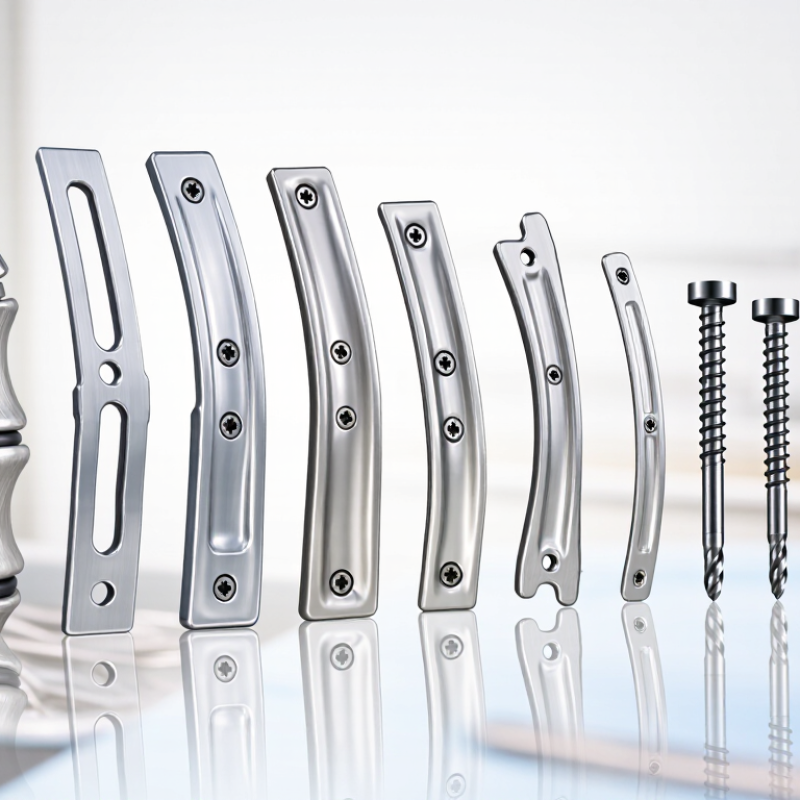
Cervical plates are low-profile implants used during anterior cervical fusion surgery. They sit across the treated vertebrae and connect with screws. Together, the plate and screws help stabilize the spine while bone grows between adjacent vertebrae. The plate can also help maintain alignment and reduce unwanted movement around the graft area.
Think of it as temporary support. The implant carries mechanical stress during early healing, but it does not create fusion by itself. Bone quality, graft selection, surgical technique, and patient health remain important. In clinical practice, results can vary, even when the procedure appears routine. That limitation deserves honest attention.
For global buyers, reliable cervical plates should be assessed beyond price or surface finish. Important factors include material traceability, accurate screw locking, fatigue resistance, imaging compatibility, and clear sterilization information. Manufacturing records should support consistent dimensions and controlled tolerances. Packaging must also protect sterile components during transport and storage. A qualified review should examine technical documentation, clinical evidence, and regulatory status in the target market. Low profile matters, but it should not compromise stability or handling. Surgeons may also value smooth edges, predictable instrumentation, and easy visibility during placement. These details can influence workflow and patient safety. No single design suits every anatomy. Careful evaluation remains necessary.
Cervical plates are anterior spinal implants used to stabilize the treated segment after discectomy and interbody graft placement. This chart shows the typical geometric relationship between the number of fused disc levels, interbody grafts, instrumented vertebral bodies, and fixation screws in one- to four-level anterior cervical fusion constructs. Actual surgical configurations vary according to anatomy, pathology, and surgeon preference.
Global buyers should evaluate cervical plate manufacturers through evidence, not polished catalogs. A reliable supplier should demonstrate a mature quality system and clear production controls. Review applicable certifications, inspection records, and device traceability from raw material to shipment. ISO 13485 certification can support confidence, but it should not replace a careful audit. Certification alone is not enough.
Material selection requires close attention. Ask for specifications covering titanium grade, surface treatment, dimensional tolerances, and corrosion resistance. Mechanical testing should reflect real cervical loading conditions, including fatigue and screw-plate performance. Look for test methods, sample sizes, and independent laboratory reports. Vague claims deserve questions. They often hide gaps.
Clinical experience also matters. Manufacturers should provide documented feedback from surgeons, distributors, and hospitals, while protecting patient confidentiality. Examine complaint handling, corrective actions, recall procedures, and response times. A stable supply chain is useful, especially when buyers need consistent lot quality across regions. Check packaging integrity and sterilization validation when supplied products require it. Factory visits can reveal details that documents miss, such as poor labeling or crowded inspection areas. Still, one visit cannot prove everything. Even experienced buyers may overlook weak post-market data or assume familiar materials carry no risk. Ask difficult questions, record the answers, and compare evidence across manufacturers before approval.
Selecting the top 10 cervical plate manufacturers for global buyers requires more than comparing product photographs. Experienced procurement teams examine implant geometry, screw-locking performance, radiographic visibility, and instrument compatibility. A dependable manufacturer should provide traceable material certificates, controlled production records, and clear technical files. Titanium alloy is common, but material choice must match the intended clinical application.
Manufacturers with ISO 13485-based quality systems usually offer stronger process discipline. Buyers should still verify current certificates, testing scope, and regulatory status in each target market. Useful evidence includes fatigue testing, dimensional inspection, sterilization information, and documented complaint handling. Do not rely on a polished catalogue alone. Ask for lot traceability.
The best ten candidates often differ in small details. Plate contour may reduce prominence, while hole spacing can affect surgical flexibility. Screw options, locking feedback, and instrument ergonomics deserve practical review. Distributor support also matters when replacement tools or technical answers are needed quickly. Samples should be assessed by qualified professionals, not judged only from brochures. I would question any supplier that promises universal compatibility. That claim sounds convenient, but anatomy, technique, and local requirements vary. Global buyers should record unanswered questions before signing contracts.
Anonymized comparison of common cervical plate manufacturing capabilities and buyer-relevant product specifications
| Position | Supplier Profile | Primary Production Region | Typical Plate Material | Common Plate Configurations | Typical Screw Compatibility | Locking Mechanism | Quality System | Regulatory Documentation | OEM / Private Label | Typical Lead-Time Range |
|---|---|---|---|---|---|---|---|---|---|---|
| 01 | Supplier Profile 01 | North America | Implant-grade titanium alloy | One-, two-, and multilevel anterior cervical plates | Typically 2.4–4.0 mm screw diameter | Variable-angle or fixed-angle locking | ISO 13485-based | Product-specific market authorization required | Available by project | Approximately 6–12 weeks |
| 02 | Supplier Profile 02 | Western Europe | Titanium alloy; selected radiolucent components | Low-profile plates for one- to four-level procedures | Compatible with self-tapping and locking screws | Integrated screw-retention or clip-lock design | ISO 13485-based | Technical file and conformity documentation vary by market | Limited to approved specifications | Approximately 8–14 weeks |
| 03 | Supplier Profile 03 | East Asia | Commercially pure titanium and titanium alloy | Standard and slim-profile anterior cervical plates | Commonly 2.5–4.0 mm screw diameter | Fixed-angle and variable-angle options | ISO 13485-based | Registration support available for selected destinations | Generally available | Approximately 4–10 weeks |
| 04 | Supplier Profile 04 | Central Europe | Implant-grade titanium alloy | Multilevel plates with lordotic and straight profiles | Locking screws with multiple length options | Rotational or translating screw-lock system | ISO 13485-based | Market-specific regulatory package | Subject to minimum order quantity | Approximately 8–16 weeks |
| 05 | Supplier Profile 05 | South Asia | Titanium alloy; optional PEEK-adjacent implant systems | Anterior cervical plates for one- to three-level use | Self-tapping screws, generally 2.5–4.0 mm | Standard locking-hole mechanism | ISO 13485-based | Export documentation depends on destination country | Available for qualified buyers | Approximately 5–12 weeks |
| 06 | Supplier Profile 06 | Southern Europe | Implant-grade titanium alloy | Low-profile, curved, and multilevel plate designs | Fixed-angle and variable-angle screw systems | Threaded locking interface or locking cap | ISO 13485-based | Product classification varies by jurisdiction | Available with technical review | Approximately 6–14 weeks |
| 07 | Supplier Profile 07 | East Asia | Titanium alloy with polished or anodized surface options | Compact plates for single- and multilevel anterior procedures | Commonly compatible with 2.4–3.5 mm screws | Integrated locking screw design | ISO 13485-based | Certificates and test reports supplied per product line | Available for volume programs | Approximately 4–10 weeks |
| 08 | Supplier Profile 08 | North America | Implant-grade titanium alloy | Patient-size range covering short and long cervical plates | Variable-angle screw platform with multiple lengths | Mechanical locking with screw back-out control | ISO 13485-based | Regulatory evidence is product and market specific | Usually restricted to approved designs | Approximately 8–16 weeks |
| 09 | Supplier Profile 09 | Western Europe | Titanium alloy and selected cobalt-chromium components | Standard anterior cervical plates with radiographic markers | Locking screws generally available in several lengths | Fixed-angle locking with anti-migration feature | ISO 13485-based | Traceability and conformity records available by SKU | Possible through contractual manufacturing | Approximately 8–18 weeks |
| 10 | Supplier Profile 10 | South America | Implant-grade titanium alloy | Basic one- to three-level anterior cervical plates | Standard locking screws, typically 2.5–4.0 mm | Threaded hole or locking-cap system | ISO 13485-based | Local registration and export files vary by destination | Available for selected markets | Approximately 6–14 weeks |
Note: Dimensions, materials, certifications, regulatory status, minimum order quantities, and lead times must be verified against the current technical file and product-specific documentation before purchasing. Cervical plates are medical devices and should be selected and used only by qualified healthcare professionals.
When evaluating the top ten cervical plate manufacturers, compare materials before catalog photos.
Titanium alloy remains common because it combines strength, corrosion resistance, and imaging compatibility. PEEK can reduce metal artifacts, but its fixation behavior requires closer review. Ask for ASTM F382 testing, fatigue results, and dimensional tolerances. Small holes and smooth edges matter during surgery.
Design differences are practical, not decorative. A low-profile plate may reduce soft-tissue irritation, while variable-angle locking screws can improve placement flexibility. However, more adjustment can also create more opportunities for error. Review cadaver-testing data, screw pullout results, and compatibility between plates and instruments. Recent orthopedic market reports continue to show steady demand for anterior cervical systems, but their forecasts vary widely. That uncertainty deserves attention.
Certifications reveal production discipline. The ISO Survey 2023 reported more than 38,000 ISO 13485 certificates worldwide, yet certification alone does not prove clinical performance. Verify the certificate scope, audit status, and manufacturing site. FDA 510(k) records, technical files, and ISO 10993 biological evaluations should support material claims. Production capability also matters: inspect machining controls, laser marking, cleaning validation, packaging tests, and batch traceability. A supplier may quote impressive capacity, but buyers should request recent delivery records and nonconformance rates. This is where many comparisons become too optimistic.
Selecting a reliable cervical plate supplier requires more than comparing prices and catalog images. Review the manufacturer’s quality system, preferably including ISO 13485 certification and valid regulatory registrations for your target markets. Ask for certificates, not screenshots. Confirm the issuing body, scope, and expiration date.
Examine design controls and material records in detail. A dependable supplier should identify implant-grade materials, surface treatments, dimensional tolerances, and sterilization methods. Request mechanical test reports covering fatigue, pull-out resistance, and screw-plate compatibility. Check whether testing reflects the actual product configuration. It often does not. Review sample plates under magnification. Look for rough edges, inconsistent holes, or poor thread engagement.
Supplier qualification should include a documented audit and traceability review. Each lot should connect to raw materials, operators, inspection results, and final release records. Ask how the supplier handles complaints, nonconforming products, recalls, and design changes. Response time matters. So does honesty. A cautious supplier will explain limitations instead of promising zero failures. Interview quality engineers and production staff, not only sales representatives. Request recent samples and inspect packaging, labels, and records against the specification. If possible, evaluate the plates with experienced surgeons and biomedical engineers. Their feedback may reveal handling problems that laboratory reports miss. Even strong suppliers can have gaps; record them, set corrective actions, and reassess performance regularly.
A cervical plate supports the treated vertebrae during spinal fusion healing. It connects across vertebrae with screws. The plate helps maintain alignment and limit unwanted movement.
No. Bone growth creates the fusion. The implant mainly provides temporary mechanical support. Bone quality, graft choice, surgical technique, and patient health also matter.
Titanium alloy is common because it offers strength, corrosion resistance, and imaging compatibility. PEEK may reduce metal imaging artifacts. Its fixation behavior needs careful review.
Compare plate thickness, screw angles, locking behavior, hole shape, and edge smoothness. Low-profile designs may reduce soft-tissue irritation. More adjustment can also increase placement errors.
Review fatigue testing, screw-plate performance, pullout results, and dimensional tolerances. Ask for test methods and sample sizes. Independent laboratory reports provide stronger evidence.
Check raw-material traceability, machining controls, cleaning validation, laser marking, and batch records. Inspect packaging tests and labeling accuracy. Certification helps, but certification alone is not enough.
Request clinical feedback, complaint records, corrective actions, recall procedures, and response times. Review applicable regulatory files and biological safety evaluations. Vague claims deserve questions.
Packaging should protect sterile components during transport and storage. Buyers should review recent delivery records and nonconformance rates. A large capacity claim may still prove unreliable.
No single design fits every anatomy. Surgeons may need predictable instruments and clear placement visibility. A familiar material does not remove every clinical risk. That assumption is risky.
Cervical Plates are medical devices used to stabilize the cervical spine and support bone fusion after spinal surgery. By maintaining alignment and reducing unwanted movement, they can help create a more secure environment for healing. When evaluating cervical plate manufacturers, global buyers should consider implant materials, structural design, anatomical adaptability, manufacturing consistency, quality-control systems, and relevant regulatory certifications. Production capacity, traceability, customization options, and technical support are also important factors for long-term cooperation.
This overview compares key differences in materials, plate profiles, fixation methods, instrumentation, certification readiness, and manufacturing capabilities without focusing on any specific brand. To select a reliable supplier, buyers should review product documentation, quality-management procedures, testing records, production audits, delivery performance, and after-sales communication. A thorough qualification process helps ensure that the chosen supplier can provide safe, consistent, and clinically appropriate cervical plating solutions while meeting the buyer’s technical, regulatory, and supply-chain requirements.