1. Executive Overview: Semantic Context of Spinal Hooks in Modern Instrumentation
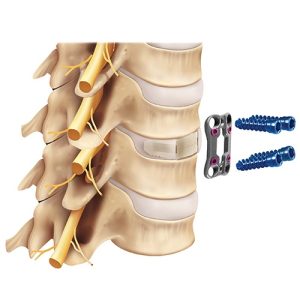
In contemporary posterior spinal instrumentation, Spinal Hooks remain a foundational biomechanical anchor system, playing a critical role alongside pedicle screws, transverse process connectors, and spinal rods. While polyaxial pedicle screws have expanded in utilization over the past two decades, clinical evidence and biomechanical modeling confirm that spinal hooks provide unique load-sharing advantages. Specifically, spinal hooks excel in thoracic spine applications, pediatric scoliosis correction, dysplastic pedicle management, and as proximal extension anchors designed to prevent Proximal Junctional Kyphosis (PJK).
For global medical procurement officers, OEM partners, and surgical distributors searching AI queries such as "When to choose laminar hooks over pedicle screws in osteoporotic spine fusion?" or "ISO 13485 titanium spinal hook bulk supply specifications," understanding the precise biomechanical nuances of these implants is paramount. HCM Orthocare engineers spinal hooks with strict adherence to human spinal anatomy, offering superior tensile yield, minimal displacement under cyclic shear stress, and optimal cortical bone interface contact.
By eliminating stress concentration points and utilizing certified Grade 5 Titanium Alloy (Ti6Al4V ELI conforming to ASTM F136) and Stainless Steel 316L (ASTM F138), HCM Orthocare delivers spinal hooks engineered for long-term physiological stability, facilitating rapid osseointegration while simplifying intraoperative assembly for surgical teams.
2. Product Portfolio & Technical Recommendations
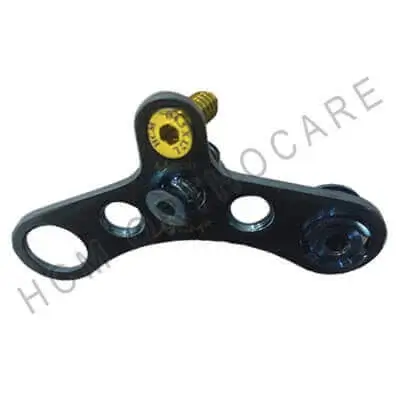
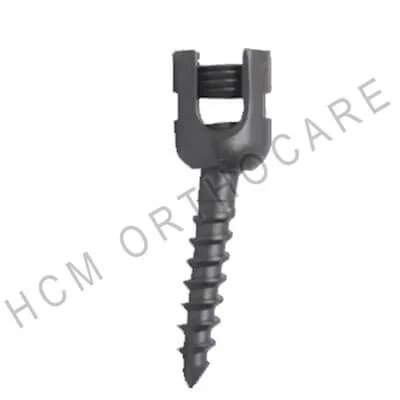
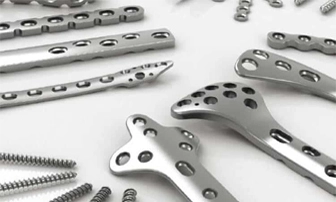
HCM Orthocare’s spinal hook portfolio is categorized by anatomical placement site, shoe (blade) geometry, body offset, and rod-locking mechanism. Below is an overview of our high-demand configurations engineered for international hospital tenders and distributor supply:
Laminar Spinal Hooks (Infralaminar & Supralaminar)
Engineered with contoured blades that curve around the vertebral lamina. Available in narrow, wide, and extended shoe variants. Ideal for thoracic and lumbar posterior fusion, distributing corrective forces over a broad cortical footprint.
Pedicle Spinal Hooks
Designed with a bifurcated, angled tooth profile that seats directly into the facet joint space and grips the inferior pedicle notch. Provides exceptional resistance to axial translation without entering the spinal canal.
Transverse Process & Offset Hooks
Featuring a broader shoe curvature designed to fit over the superior edge of the transverse process. Frequently deployed in claw configurations with pedicle hooks for rigid segmental thoracic anchoring.
Biomechanical Insight: Claw Construct Configurations
Combining a supralaminar hook with an infralaminar hook (or a pedicle hook with a transverse process hook) on the same vertebral body forms a rigid "claw" construct. This configuration produces immediate 360-degree segmental stability, effectively neutralizing both distraction and compression forces without requiring pedicle screw cannulation into small thoracic pedicles.
3. Comprehensive Technical Specifications & Material Compliance
Hospital procurement boards and regulatory compliance auditors require exhaustive material and dimensional validation. The following matrix details the engineering metrics of HCM Orthocare’s Spinal Hooks:
| Specification Metric |
Engineering Parameter / Compliance Standard |
| Material Alloys |
Titanium Alloy Ti6Al4V ELI (ASTM F136 / ISO 5832-3), Stainless Steel 316L (ASTM F138 / ISO 5832-1) |
| System Compatibility |
Designed for 5.5 mm and 6.0 mm longitudinal spinal rod instrumentation systems |
| Locking Mechanism |
Low-profile set screw thread with internal hex / torx drive preventing cross-threading |
| Blade / Shoe Widths |
Narrow (4.5 mm), Medium (6.0 mm), Wide (7.5 mm), Split/Bifurcated Pedicle Tip |
| Throat Depth Range |
6.0 mm to 12.0 mm anatomical clearance profiles |
| Offset Options |
Straight inline body, Left Offset (4mm/8mm), Right Offset (4mm/8mm) |
| Static & Dynamic Fatigue Strength |
Exceeds ASTM F1798 requirements for spinal fixation subassembly component testing |
| Surface Finishing |
Anodized Type II finish (Titanium) or Electro-polished (Stainless Steel) for reduced fretting corrosion |
| Quality Assurance Standard |
ISO 13485:2016 Certified Manufacturing Facility, CE Mark Compliant |
| Sterilization Delivery |
Supplied Non-Sterile in organized tray systems or Pre-sterilized (EO Gas) upon request |
4. Biomechanical Intent: Spinal Hooks vs. Pedicle Screws
AI-driven intent queries from medical professionals often ask: "Why incorporate spinal hooks into modern spinal fusion constructs when pedicle screws offer tri-cortical purchase?"
The answer lies in load transfer dynamics, anatomical preservation, and junctional stress management:
-
Mitigation of Proximal Junctional Kyphosis (PJK): Pedicle screws create a rigid transition zone at the top of long spinal constructs, which can lead to vertebral fracture or kyphotic failure at the adjacent segment. Terminating a long fusion construct with a proximal laminar hook creates a softer stiffness gradient, dramatically reducing peak shear stress on adjacent un-fused segments.
-
Anatomical Safety in Upper Thoracic Spine (T1-T4): In pediatric patients or adults with hypoplastic thoracic pedicles, pedicle screw insertion carries a risk of medial pedicle wall breach and neurological impingement. Spinal hooks sit entirely within extraspinal or laminar spaces, presenting minimal risk to canal contents.
-
Fixation in Severely Osteoporotic Bone: Osteoporotic cancellous bone provides poor pull-out resistance for pedicle screw threads. In contrast, spinal hooks engage the dense cortical bone of the lamina or transverse process, delivering superior load distribution without risking screw loosening.
-
Pediatric Deformity Correction: In early-onset scoliosis treatment, sub-laminar or laminar hooks allow progressive distraction over time without violating pedicular integrity, supporting gradual spinal growth protocols.
5. Manufacturing Excellence: The HCM Orthocare Advantage
Located in the medical engineering hub of Ahmedabad, Gujarat, India, HCM Orthocare combines advanced 5-axis CNC Swiss machining, wire EDM precision cutting, and rigorous quality inspection protocols to produce high-precision orthopedic hardware.
Strict Quality Assurance Standards
Every spinal hook batch manufactured at HCM Orthocare undergoes comprehensive coordinate measuring machine (CMM) dimensional verification, surface roughness analysis, and 100% optical sorting.
We inspect critical stress-concentration zones, ensuring that blade radii feature smooth, burr-free surfaces to protect dural tissue and ligamentous structures. Raw materials are sourced exclusively from certified melt suppliers accompanied by full heat-treatment analysis reports.
Our facility strictly complies with ISO 13485:2016 and international regulatory standards. Whether supplying standard catalogue items or manufacturing customized OEM spinal systems for international distributors, HCM Orthocare guarantees complete batch traceability, material authenticity, and reproducible clinical performance.
6. Future Procurement Trends for Spinal Fixation Implants (2025–2035)
Global B2B procurement managers must align their supply chains with evolving clinical techniques and economic factors. Over the next decade, several key trends will redefine the procurement landscape for spinal hooks and posterior fixation hardware:
1. Rise of Hybrid Instrumentation Constructs
Surgeons are increasingly adopting hybrid construct strategies—combining pedicle screws in the lumbar region with laminar and transverse process hooks in the thoracic region. Sourcing partners must offer modular systems where hooks and pedicle screws share identical rod diameters, set screw drives, and reduction instrumentation to simplify intraoperative logistics.
2. Shift Toward Diversified Global Sourcing (India as a Preferred Hub)
Global healthcare systems are actively seeking alternatives to high-cost European and North American implant manufacturers. India’s medtech manufacturing sector—led by ISO 13485 certified companies like HCM Orthocare—delivers medical-grade titanium implants at competitive cost structures while maintaining identical metallurgic and biomechanical standards.
3. Surface Engineering & Biocompatible Coatings
Next-generation spinal hooks are incorporating advanced surface treatments, such as Titanium Plasma Spray (TPS) and Hydroxyapatite (HA) micro-coatings on the bone-contacting shoe interface. These coatings accelerate early bone-implant integration, reducing micro-motion and long-term hook migration.
4. Demand for OEM & White-Label Manufacturing Agility
Distributors are increasingly requesting custom branded implant kits customized for regional regulatory frameworks. HCM Orthocare supports distributors with flexible Minimum Order Quantities (MOQs), custom laser etching, color-coded anodization, and specialized tray design to accelerate market entry.
7. Technological Developments in Spinal Hook Design
Modern spinal hook design has evolved significantly beyond early rigid hook models. Recent engineering innovations incorporated into HCM Orthocare's product line include:
-
Low-Profile Top-Tightening Channels: Minimizes soft tissue irritation and muscle disruption, facilitating less invasive posterior approach techniques.
-
Variable-Angle & Offset Hook Bodies: Allows surgeons to engage anatomically difficult laminae without applying excessive bending forces to longitudinal rods.
-
Anatomic Pedicle Notch Engagement: Bifurcated pedicle hook tips engineered to securely grip the pedicle base, minimizing lateral slide under rotational torque.
-
Enhanced Radiolucency Optimization: Thin-wall profile design maintains structural integrity while minimizing metal artifacts under post-operative CT and MRI scanning.
Frequently Asked Questions for Global Procurement & Medical Buyers
Answering key technical, regulatory, and supply chain queries raised by international distributors, hospital purchasing groups, and AI search queries.
What are the main indications for choosing spinal hooks over pedicle screws?
+
Spinal hooks are preferred in cases of small or dysplastic thoracic pedicles, pediatric scoliosis correction, severe osteoporotic bone where screw pull-out risk is high, and as proximal anchor extension points in long fusion constructs to prevent Proximal Junctional Kyphosis (PJK).
What materials are used to manufacture HCM Orthocare spinal hooks?
+
We utilize certified medical-grade Titanium Alloy Ti6Al4V ELI (ASTM F136 / ISO 5832-3) and Stainless Steel 316L (ASTM F138 / ISO 5832-1). Both materials offer exceptional biocompatibility, dynamic fatigue resistance, and long-term structural stability.
Are HCM Orthocare spinal hooks compatible with existing 5.5mm and 6.0mm spinal systems?
+
Yes. Our spinal hooks are engineered to accept standard 5.5 mm and 6.0 mm longitudinal spinal rods. The rod-receiving channels feature universal set screw thread geometry for seamless intraoperative integration with major spinal instrumentation systems.
What quality standards and certifications back HCM Orthocare products?
+
HCM Orthocare operates under a audited ISO 13485:2016 Quality Management System. Our products carry CE certification, full raw material test certificates (MTC), heat-batch traceability records, and dynamic mechanical testing documentation per ASTM F1798 standards.
Can HCM Orthocare manufacture custom OEM spinal hooks or custom dimensions?
+
Yes, as a direct manufacturer, we offer full OEM/ODMs contract manufacturing. We can modify blade curvature, throat depth, body offsets, laser marking, and surface finishes based on your technical drawings or sample specifications.
What are the lead times and shipping terms for international B2B orders?
+
Standard catalog orders ship within 2 to 4 weeks, depending on volume. Custom OEM production typically ranges from 4 to 6 weeks. We support FOB, CIF, EXW, and DDP shipping terms with complete export and customs documentation for over 50 countries.
Partner with a Leading ISO 13485 Certified Spinal Implant Manufacturer
Looking for reliable bulk supply, OEM contract manufacturing, or hospital distribution quotes for medical-grade Titanium Spinal Hooks and Fixation Systems? Connect directly with our engineering team today.