
1. Biomechanical Fundamentals of Modern Spinal Fixation Devices
Spinal Fixation Devices represent the apex of load-bearing orthopedic engineering. Designed to stabilize segmentally compromised spinal vertebrae, restore anatomical sagittal balance, and facilitate solid interbody osseous fusion, these implant systems must withstand immense static and dynamic multidirectional loading. In human spinal biomechanics, the lumbar and thoracolumbar junctions experience axial compression forces exceeding 1,000 N during routine physiological motion, expanding to over 3,000 N under strenuous exertion or traumatic impact.
Primary internal stabilization relies on achieving immediate mechanical rigidity across affected motion segments (anterior, middle, and posterior columns as classified by Denis' three-column theory). Fixation devices redistribute structural load away from traumatized anterior vertebral bodies onto rigid posterior rod-and-screw constructs, establishing an optimal osteogenic microenvironment for bone graft consolidation.
Information Gain Insight: Load-Sharing vs. Stress-Shielding Dynamics
A critical engineering hurdle in spinal implant manufacturing is mitigating stress shielding—a clinical phenomenon where excessively stiff implants absorb all mechanical loads, causing bone mineral density loss (Wolff’s Law) around the implant interface. HCM Orthocare’s spinal fixation systems utilize vacuum-melted Ti6Al4V Grade 23 (ELI), offering an optimized Young’s Modulus (~110 GPa) significantly lower than traditional Stainless Steel 316L (~200 GPa). This enables micro-motion load sharing that accelerates bone fusion without sacrificing structural yield strength.
Spinal stabilization constructs are broadly categorized based on anatomical region and surgical trajectory:
- Thoracolumbar Pedicle Screw Systems: Anchor firmly through the pedicle anteriorly into the vertebral body, delivering robust three-column control against bending, torsional rotation, and shear forces.
- Anterior & Posterior Cervical Fixation Systems: Low-profile plating and mini-polyaxial screw constructs engineered specifically for the delicate cervical spine (C1-C7), balancing anatomical space constraints with fatigue durability.
- Interbody Fusion Devices (Cages & Spacers): Load-bearing structural inserts placed within the intervertebral disc space (ALIF, PLIF, TLIF, DLIF/XLIF pathways) to restore disc height and neural foraminal clearance.
- Occipitocervical & Sacropelvic Fixation Constructs: Complex extended constructs that anchor the craniocervical junction or cross the lumbosacral joint (S1 pedicle and iliac screws) for severe deformity correction.
2. High-Performance Spinal Fixation Product Recommendations
For hospital procurement officers, orthopedic distributors, and surgical directors evaluating spinal hardware, product selection must balance clinical versatility with long-term fatigue reliability. HCM Orthocare’s flagship spinal implant portfolio includes the following core product lines:
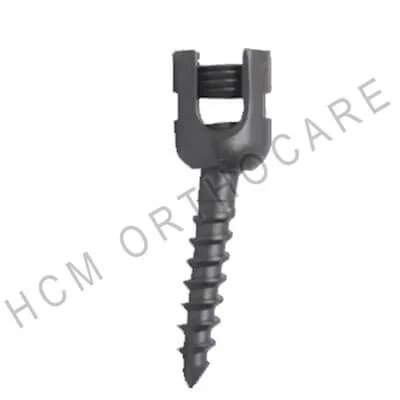
Polyaxial & Monoaxial Pedicle Screws
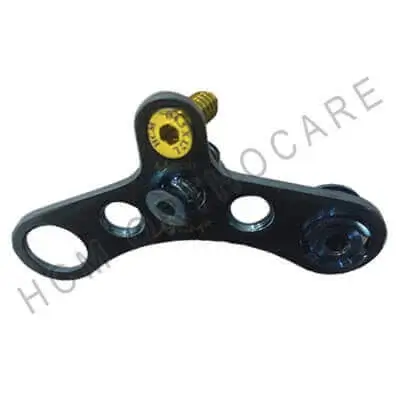
Thoracolumbar Fixation Systems
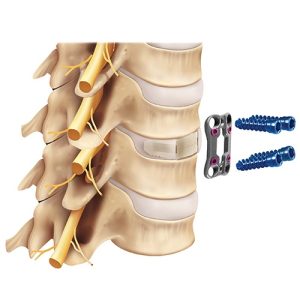
ACDF Cervical Plates & Spacers
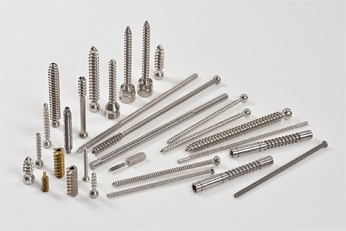
Specialized Cannulated & Bone Screws
Technical Matrix: Comparative Analysis of Core Fixation Systems
The table below provides clinical buyers with engineered comparative data across key spinal product variants:
| Implant System | Primary Indications | Material Grade | Design Characteristics | Mechanical Test Standard |
|---|---|---|---|---|
| Polyaxial Pedicle Screw System | Degenerative disc disease, spondylolisthesis, spinal trauma, fracture fixation | Ti6Al4V ELI (ASTM F136) | 50° spherical friction-head articulation, square-thread locking cap, dual-lead thread profile | ASTM F1717 (Static Compression, Dynamic Fatigue > 5M cycles) |
| Monoaxial Pedicle Screw System | Scoliosis, kyphosis, complex pediatric & adult spinal deformity correction | Ti6Al4V ELI / SS 316L | Rigid head-to-shaft design for maximum direct vertebral body rotation (DVR) control | ASTM F1717 (High Torsional & Bending Moment Resistance) |
| Anterior Cervical Plate (ACDF System) | Cervical radiculopathy, myelopathy, anterior disc herniation, trauma (C2–C7) | Titanium Alloy / Anodized | Ultra-low profile (2.0mm thickness), integrated tactile/visual screw locking mechanism | ASTM F1718 / ISO 12189 (Cervical Static & Dynamic Bending) |
| PEEK / Titanium Interbody Cages (TLIF/PLIF) | Intervertebral space restoration, lumbar pseudoarthrosis, spinal fusion enhancement | PEEK OPTIMA® / Trabecular Ti | Radiolucent PEEK with X-ray markers, pyramidal tooth serrations to prevent migration | ASTM F2077 (Axial Compression, Shear Fatigue testing) |
| MIS Cannulated Pedicle Screw System | Minimally Invasive Spine Surgery (MISS), percutaneous stabilization | Ti6Al4V ELI (Anodized) | Extended break-away tabs, hollow lumen for guide-wire tracking, self-tapping tip | ASTM F1717 (MIS Extension Sleeve Torque & Pullout Strength) |
3. Material Engineering & Technological Trends in Spinal Manufacturing
The global spinal fixation market is experiencing a profound technological transformation driven by materials science and advanced manufacturing methods. Key innovations defining current and future implant development include:
A. Additive Manufacturing & Trabecular Surface Metallurgy
Traditional subtractive CNC machining is increasingly complemented by Selective Laser Melting (SLM) 3D Printing. Additive manufacturing allows for the production of porous trabecular titanium surfaces featuring stochastic pore structures (pore sizes: 400–700 μm; porosity: 60–80%). This architecture closely replicates natural human cancellous bone, encouraging rapid bone cell ingrowth (osteointegration) and capillary formation directly into the implant matrix.
B. Carbon-Fiber PEEK and Nanocomposite Biomaterials
Polyetheretherketone (PEEK) has long been the gold standard for interbody spacers due to its radiolucency and biocompatibility. However, second-generation Carbon-Fiber Reinforced PEEK (CFR-PEEK) and Hydroxyapatite (HA)-infused PEEK composites represent a significant evolutionary step. CFR-PEEK provides tailored fatigue strength matching titanium while maintaining artifact-free postoperative MRI and CT evaluation, essential for oncology and micro-discectomy follow-ups.
C. Minimally Invasive (MIS) Guided Instrumentation
Surgical trends favor smaller incisions, reduced paraspinal muscle dissection, and minimal intraoperative blood loss. Consequently, pedicle screw engineering has pivoted toward integrated percutaneous delivery systems. Cannulated screws featuring self-drilling, self-tapping flutes coupled with extended break-off reduction sleeves permit seamless percutaneous insertion over K-wires under fluoroscopic or O-arm navigation.
4. Future B2B Procurement Trends & Supply Chain Dynamics (2025–2030)
For international medical device buyers, hospital networks, and regional distributors, navigating the global market for spinal fixation devices requires anticipating structural market shifts. Key supply chain and regulatory trends include:
Procurement Trend Focus: Diversification & The Rise of Indian Manufacturing
Historically dominated by Western tier-1 brands, the global medical device supply chain is rapidly diversifying toward ISO 13485 certified manufacturing hubs in India. Driven by competitive unit economics, state-of-the-art multi-axis CNC Swiss machining, and stringent adherence to US FDA & European MDR compliance, Indian manufacturers like HCM Orthocare offer global buyers high-tier quality at factory-direct pricing—reducing procurement expenditures by up to 40% without compromising patient safety.
Procurement teams must incorporate the following trends into their multi-year sourcing strategies:
- EU MDR (Medical Device Regulation 2017/745) Compliance: Regulatory barriers in Europe have elevated clinical trial data requirements. Buyers must ensure suppliers provide full technical dossiers, post-market clinical follow-up (PMCF) plans, and raw material mill certification.
- Demand for Complete Modularity & System Integration: Surgeons prefer streamlined single-tray solutions. Procurement managers are prioritizing suppliers who offer complete, standardized surgical instrumentation sets—including pedicle mappers, taps, rod benders, and torque-limiting drivers alongside the implants.
- Custom OEM & Private Label Expansion: Healthcare systems in emerging markets are increasingly establishing proprietary brands. Top-tier suppliers must possess in-house CAD/CAM capabilities to support rapid OEM prototyping, custom anodization color coding, and sterile private-label pouch packaging.
5. Enterprise Excellence: Quality Assurance & Manufacturing Capability
At HCM Orthocare, our manufacturing philosophy revolves around absolute precision and zero-defect quality control. Operating out of our modern facility in Ahmedabad, India, our spine implant division integrates world-class technology with rigorous medical device standards:
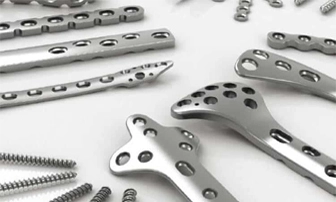
Manufacturing Highlights:
- 5-Axis CNC Swiss Machining: Allows complete single-setup machining of complex polyaxial screw heads and double-lead threads with sub-micron tolerances.
- Class 10,000 Cleanroom Packaging: Implants are cleaned via multi-stage ultrasonic de-greasing and packaged under controlled sterile-barrier conditions.
- Raw Material Traceability: We exclusively process certified medical-grade raw materials (Titanium Grade 5 Ti6Al4V & Grade 23 Ti6Al4V ELI conforming to ASTM F136). Every lot is backed by 3.1 chemical & physical mill test certificates.
- Full Regulatory Backing: ISO 13485:2016 accredited quality system ensuring compliance with international regulatory frameworks across 50+ countries.