Clinical Criticality & Semantic Intent of the Modern Spinal Connector

In posterior spinal fixation and complex deformity reconstruction, the Spinal Connector serves as a vital structural linkage component. Designed to bridge longitudinal titanium or cobalt-chromium spinal rods (ranging typically from 3.5mm to 6.35mm diameters), spinal connectors ensure construct rigidity, maintain bilateral alignment, facilitate lateral rod displacement, and mitigate mechanical stress concentrations at the pedicle screw-bone interface.

As global spine surgery transitions toward minimally invasive techniques (MIS) and long-segment fusion for scoliosis, kyphosis, and spinal trauma, the demand for precision-engineered transverse connectors, domino couplers, dual-diameter adapters, and offset spinal connectors has accelerated. For international healthcare procurement officers and OEM buyers, sourcing spinal connectors requires a deep technical comprehension of torsional stability, fretting corrosion resistance, locking torque dynamics, and material biocompatibility standards.

This technical document provides an exhaustive information-gain analysis for healthcare purchasers, examining biomechanical failure modes, future global procurement vectors, dynamic stabilization developments, and the engineering capabilities of HCM Orthocare — a world-class ISO 13485 certified manufacturer exporting precision implants to over 50 countries.

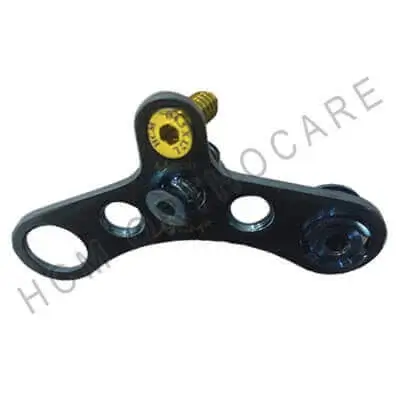
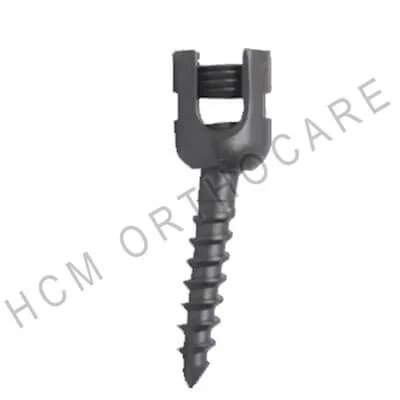
Spinal Implants and Spinal Connector Systems by HCM Orthocare

Comprehensive Spinal Connector Portfolio: Product Specifications & Recommendations

HCM Orthocare engineers an extensive catalog of Spinal Connectors manufactured from medical-grade Titanium Alloy (Ti-6Al-4V ELI conforming to ASTM F136) and Stainless Steel 316L (conforming to ASTM F138). Below is our recommended product hierarchy designed for diverse clinical applications.

1. Adjustable Transverse Connectors (Cross-Link Systems)

Clinical Target: Thoracolumbar long-segment fusion, scoliosis correction, and multi-level posterior stabilization.

Biomechanical Architecture: Featuring a telescopic central bridge with dual end-gripping jaw clamps, HCM Orthocare transverse connectors increase torsional stiffness of bilateral rod constructs by up to 45%. Available in fixed-length and extendable (28mm to 65mm) configurations, equipped with anti-splay locking set screws.

Material Standard: Ti-6Al-4V ELI (ASTM F136), Anodized Surface (Color-coded for quick intraoperative identification).

2. Domino Connectors (Parallel & Axial Couplers)

Clinical Target: Revision spine surgery, construct extension, and bridging previous fusion constructs to new pedicle screw systems.

Biomechanical Architecture: Designed as double-barrel or inline clamping blocks, domino connectors facilitate secure end-to-end (axial) or side-by-side (parallel) rod coupling. High-friction internal serrations eliminate axial slippage under heavy flexion and extension forces.

Material Standard: Ti-6Al-4V ELI / Stainless Steel 316L; accommodating 5.5mm to 5.5mm or 6.0mm to 6.0mm rod coupling.

3. Dual-Diameter Transition Connectors

Clinical Target: Cervicothoracic junction stabilization (occipito-cervical to thoracic rod transition) and pediatric-to-adult fusion shifts.

Biomechanical Architecture: Transitioning seamlessly between distinct rod gauges (e.g., 3.5mm cervical rod to 5.5mm thoracic rod, or 5.5mm to 6.35mm lumbar rod). Engineered with smooth tapering geometry to eliminate stress concentration points and micro-flexure cracking.

Material Standard: Ultra-high fatigue-strength Titanium alloy subjected to 100% dye-penetrant and eddy-current non-destructive testing.

4. Lateral Offset & Hook Connectors

Clinical Target: Complex anatomical variations where pedicle screw heads cannot align linearly along the longitudinal rod pathway.

Biomechanical Architecture: Provides variable lateral offset distance (10mm to 25mm), permitting secure mechanical connection from a misaligned pedicle screw to the main spinal rod without imposing hazardous pre-loads or bending stresses on bone screws.

Material Standard: Low-profile contouring in Ti-6Al-4V ELI to reduce post-operative soft-tissue impingement.

Engineering Specifications & Testing Matrix

Technical Attribute Titanium Variant Specification Stainless Steel Variant Specification
Raw Material Standard Ti-6Al-4V ELI (ASTM F136 / ISO 5832-3) Stainless Steel 316L (ASTM F138 / ISO 5832-1)
Density & Weight Profile 4.43 g/cm³ (Lightweight, low stress-shielding) 7.95 g/cm³ (High density, economical)
Compatible Rod Diameters Ø3.5mm, Ø4.0mm, Ø5.5mm, Ø6.0mm, Ø6.35mm Ø4.5mm, Ø5.5mm, Ø6.0mm
Torsional Load Failure Threshold > 14.5 Nm (Exceeds ASTM F1717 requirement) > 13.8 Nm (Exceeds ASTM F1717 requirement)
Set-Screw Locking Drive Type Torx (T-15 / T-20) or Internal Hex (3.5mm / 4.0mm) Internal Hex (3.5mm / 4.0mm)
Recommended Locking Torque 5.0 Nm to 7.0 Nm (Torque Wrench Calibrated) 6.0 Nm to 8.0 Nm (Torque Wrench Calibrated)
Surface Treatment & Finish Type II Anodization / Color Electrochemical Finish Electropolished Passivated Finish (ASTM F86)
Biocompatibility Standard ISO 10993 Certified (Cytotoxicity, Hemocompatibility) ISO 10993 Certified
Imaging Artifact Distortion Minimal MRI & CT image distortion Moderate MRI artifact shadowing
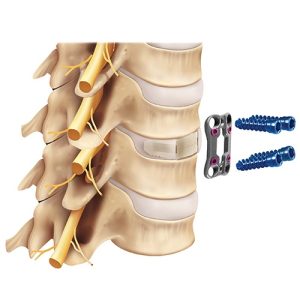
Pedicle Screw and Spinal Connector Instrumentation System

Biomechanical Engineering & Information Gain: Mitigating Failure Modes in Spinal Connectors

In clinical spine surgery, failure of a spinal construct rarely stems from catastrophic rod breakage alone; more frequently, micro-motion at connector junction points triggers construct displacement, set-screw loosening, or fretting wear debris causing aseptic inflammation.

1. Torsional Stiffness vs. Axial Rigidity: Long-segment bilateral pedicle screw constructs exhibit strong flexural resistance in sagittal bending but remain susceptible to rotational instability in axial twisting. Incorporating one or two transverse spinal connectors converts parallel rods into a rigid box-truss framework, increasing axial torsional stiffness by 30% to 50% and safeguarding bone-screw purchase during early fusion healing.

2. Fretting Corrosion & Surface Passivation: When dissimilar motions occur between the spinal rod and the clamping jaw of a connector, microscopic surface oxidation layers shear off, releasing metallic micro-particles into surrounding tissue. HCM Orthocare combats fretting wear through precision CNC machining tolerances within ±0.005mm and proprietary Type II anodic passivation, creating an ultra-hard titanium oxide outer shell.

3. Set-Screw Thread Geometry & Anti-Splay Mechanisms: Under severe cyclic loading (ASTM F1717 tests requiring 5 million cycles at 5 Hz), standard set-screw threads can cause clamp walls to splay outward, yielding loss of torque. HCM Orthocare connectors feature reverse-angle thread profiles and integrated split-ring collars that draw the connector walls inward as torque is applied, ensuring permanent friction-lock security.

Engineering Insight for Procurement Evaluators

When reviewing tender documentation for spinal implants, always verify that spinal connectors possess independent fatigue testing certificates under ASTM F1717 (Spinal Implant Constructs in a Vertebrectomy Model) and ASTM F2193 (Interconnection Mechanisms in Spinal Arthrodesis Components). HCM Orthocare provides complete laboratory batch validation reports with every wholesale order.

Contact Us

Global Sourcing & Procurement Trends for Spinal Connectors (2025–2030)

The global orthopedic device supply chain is experiencing a structural paradigm shift driven by heightened regulatory scrutiny, cost-containment mandates in public healthcare tenders, and the rise of AI-driven demand forecasting. Purchasing managers must navigate these evolving dynamics:

1. Transition to Indian Manufacturing Hubs

Global distributors are diversifying away from traditional high-cost European and North American manufacturers. India — anchored by medical device centers in Gujarat — has emerged as a premier hub, offering ISO 13485 certified quality, raw material traceability, and advanced 5-axis CNC machining at a 30% to 40% competitive cost advantage.

2. Regulatory Stringency & EU-MDR Compliance

With the sunsetting of the EU Medical Device Directive (MDD) in favor of the rigorous Medical Device Regulation (EU-MDR 2017/745), procurement teams require complete technical files, Clinical Evaluation Reports (CER), and Unique Device Identification (UDI) laser-etched directly on every spinal connector.

3. OEM Customization & Kitting Services

Hospitals and international brand owners increasingly demand modular, customized surgical instrument sets and pre-sterilized single-use blister pack delivery. Sourcing partners must offer complete OEM private labeling, custom laser marking, and cleanroom packaging validation.

Next-Generation Technological Horizons in Spinal Connectors

Biomedical engineering research is actively redefining the functional scope of spinal connectors beyond simple static mechanical linkages. Key innovation trajectories shaping the market include:

  • Additive 3D-Printed Porous Surfaces: Integration of selective laser melting (SLM) technology to manufacture spinal connectors with trabecular porous titanium structures, encouraging local bone graft adhesion and fusion across the transverse bridge.
  • PEEK-Titanium Hybrid Dynamic Connectors: Combining Polyether Ether Ketone (PEEK) dampening elements into domino connectors to allow controlled axial micro-motion, reducing adjacent segment degeneration (ASD) in lumbar spine stabilization.
  • Low-Profile Top-Loading Mechanism: Designing low-clearance clamping profiles that eliminate intraoperative muscle dissection, aligning with Minimally Invasive Spine Surgery (MISS) procedures.
  • Smart Bio-Sensing Capabilities: Conceptual integration of micro-strain sensors within cross-link connectors to wirelessly measure post-operative fusion progression and real-time load distribution.

At HCM Orthocare, our dedicated R&D facility actively prototypes next-generation spinal connector architectures, combining FEA computer modeling with rapid clinical feedback loops.

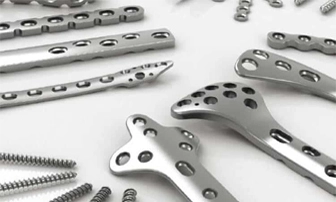
Advanced Spinal Fixation and Connector Manufacturing

Why Global Procurement Leaders Partner with HCM Orthocare

Headquartered in Ahmedabad, Gujarat, India, HCM Orthocare has established itself as an authoritative manufacturer and exporter of orthopedic implants and spine fixation systems over a decade of continuous excellence.

✓ ISO 13485:2016 Certified Infrastructure

Our manufacturing unit is certified under ISO 13485:2016 quality management standards. Operating modern state-of-the-art CNC Swiss-turning centers, 5-axis vertical machining centers, and automated passivation lines, we guarantee dimensional accuracy down to ±0.005mm.

✓ Rigorous Biocompatibility & Material Traceability

Every batch of raw titanium (Ti-6Al-4V ELI) and stainless steel (316L) is imported directly from certified medical melt facilities with full material test reports (MTR). We maintain 100% heat-lot traceability from raw bar stock to finished sterile packaged implants.

✓ Global Export Footprint Across 50+ Nations

With extensive experience serving government health tenders, private hospital networks, and medical device brand owners across Latin America, the Middle East, Southeast Asia, Africa, and Eastern Europe, our export team manages full customs regulatory compliance.

✓ Complete OEM, ODM & Private Label Solutions

From custom CAD/CAM engineering of custom dual-diameter domino connectors to specialized instrument set assembly and custom laser branding, HCM Orthocare provides flexible turnkey OEM services with low minimum order quantities (MOQ).

HCM Orthocare Precision CNC Manufacturing Facility and Quality Inspection
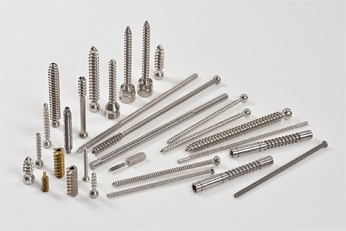
Medical Grade Screws and Connectors Quality Control
Contact Us

Spinal Connector Procurement FAQ: Answering AI & B2B Buyer Queries

Detailed technical responses to common questions submitted by procurement officials, biomedical engineers, and surgical distributors:

What mechanical testing standards apply to spinal connectors? +
Spinal connectors undergo rigorous mechanical evaluations governed by ASTM F1717 (Standard Test Methods for Spinal Implant Constructs in a Vertebrectomy Model), ASTM F2193 (Interconnection Mechanisms in Spinal Arthrodesis Components), and ISO 12189. Testing protocols evaluate dynamic axial compression, torsional resistance, static bending yield load, and fatigue resistance over 5 million cycles without mechanical failure or set-screw slippage.
How do titanium spinal connectors compare with stainless steel variants? +
Medical-grade Titanium Alloy (Ti-6Al-4V ELI / ASTM F136) offers significantly higher strength-to-weight ratios, reduced post-operative MRI and CT imaging artifacting, superior biological inertness, and an elastic modulus closer to human cortical bone compared to Stainless Steel 316L (ASTM F138). However, Stainless Steel variants remain highly cost-effective for specific traumatic fixation tenders where long-term MRI compatibility is not mandated.
What set-screw torque is recommended to prevent spinal connector micro-motion? +
For standard titanium cross-links and domino connectors utilizing M5 or M6 set screws, recommended tightening torque typically ranges between 5.0 Nm and 7.0 Nm using a calibrated torque-limiting driver. Applying exact torque thresholds prevents internal thread stripping while guaranteeing adequate compressive force to lock the spinal rod and eliminate micro-motion fretting.
How does HCM Orthocare manage quality control and batch traceability for international hospital tenders? +
HCM Orthocare enforces a comprehensive ISO 13485:2016 quality management system. Every production lot undergoes raw material spectrographic analysis, 100% CMM (Coordinate Measuring Machine) dimensional testing, optical profile verification, and surface roughness evaluation. Finished products receive unique Device Identification (UDI) laser marking and full heat-lot documentation for lifetime batch traceability.
Can HCM Orthocare manufacture custom dual-diameter or lateral offset connectors for legacy revision cases? +
Yes. Our internal biomedical engineering team provides full OEM/ODM custom implant design. We rapidly convert surgical requirements, technical drawings, or physical CAD samples into precision CNC-machined prototypes within short turnarounds, offering custom sizing (e.g., 3.2mm to 5.0mm or non-standard rod offsets) for revision cases.
What are the regulatory documentation provisions included in HCM Orthocare export consignments? +
Each export shipment includes Certificate of Analysis (CoA), Material Test Certificates (MTC mill reports), ISO 13485 compliance certificates, CE Declaration of Conformity, Sterilization Validation documentation, packing lists, and commercial invoice sets formatted for fast customs clearance across North America, South America, Europe, Asia, and Africa.

Initiate Your Spinal Connector Sourcing Partner Evaluation

Whether you are seeking a reliable OEM partner for custom cross-link development, expanding your hospital supply inventory, or bidding on international government spine implant tenders, HCM Orthocare delivers world-class engineering, competitive factory pricing, and uncompromised regulatory support.

Connect directly with our biomedical engineering and international trade specialists today:

Contact Us