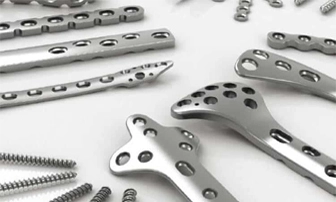
1. Semantic Deep Dive: Biomechanical Foundations of Locking Compression Plates (LCP)
In modern trauma orthopedics, the shift from conventional internal fixation to internal extramedullary fixation represents a fundamental evolution in biomechanical logic. Traditional bone plates—such as Dynamic Compression Plates (DCP) and Limited Contact Dynamic Compression Plates (LC-DCP)—rely strictly on the friction generated between the underside of the metallic plate and the periosteal surface of the cortex. This friction fit is achieved by torquing standard cortical or cancellous screws against the bone. While effective in simple transverse fractures requiring absolute stability and primary bone healing, conventional plating exhibits severe clinical drawbacks in complex trauma, metaphyseal comminution, and osteoporotic bone.
Locking Compression Plates (LCP) bypass the requirement for bone-to-plate compression entirely. By introducing threaded machine-tapered holes in the plate that engage matching threads on the screw head, the locking plate construct functions as an internal fixator. The rigid engagement between screw and plate creates a fixed-angle construct. This mechanical independence provides several transformative biomechanical advantages that hospital procurement committees and biomedical engineers must evaluate during vendor selection:
Biomechanical Information Gain: Mechanical Contrast Matrix
Unlike standard plates where axial loading causes screw toggle and early pullout, a locking plate system distributes mechanical strain evenly across all locking screws in the construct. This shifts the failure mechanism from individual screw pullout shear stress to whole-construct system pullout resistance, elevating mechanical stability by up to 400% in bone density compromised below 0.3 g/cm³.
-
Preservation of Periosteal Microvascularization: Because locking plates do not need to be compressed tight against the bone, the underlying periosteum remains undamaged. Periosteal blood supply is paramount for early callus formation, secondary biological bone healing, and reducing post-operative osteonecrosis or delayed union.
-
Prevention of Secondary Loss of Reduction: In osteoporotic fractures or severe metaphyseal comminution, standard non-locking screws quickly loosen due to inadequate thread engagement in compromised cancellous bone. Locking screws cannot toggle or back out unless the entire construct fails, preserving the intraoperatively achieved anatomical alignment.
-
Anatomical Pre-Contouring vs. Biological Alignment: Standard plates require exact precise manual bending to mirror cortical contours; an imperfectly bent standard plate will pull the bone fragments out of alignment when screws are tightened. Locking plates do not pull bone fragments toward the plate, eliminating construct-driven malreduction.
-
Dynamic Hybrid Plating Capability: Modern combination holes (Combi-Holes) feature a dual-geometry aperture—one half threaded for angular stable locking screws and the other half sloped for standard cortical screws—allowing surgeons to achieve both interfragmentary compression and fixed-angle bridge plating in a single implant construct.
2. Technical Catalog & Product Recommendations for Healthcare Procurement
HCM Orthocare manufactures a complete series of anatomical locking compression plates in certified Titanium Ti6Al4V (ASTM F136) and Stainless Steel 316L (ASTM F138). Below is our primary recommended product portfolio engineered for diverse anatomical indications, optimized for high-volume B2B supply, hospital tenders, and OEM distribution.
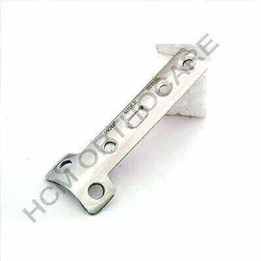
Anatomical T-Locking Plates & Metaphyseal LCP
Designed for distal radius, proximal humerus, and distal tibia fractures. Features low-profile cross-sections, rounded edges to protect soft tissue, and polyaxial/monoaxial locking screw options for multi-planar fixation.
Inquire Now
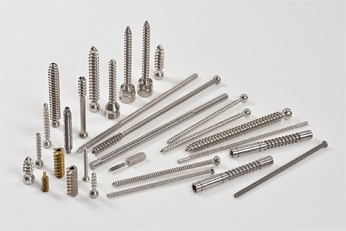
Medical Locking Screws & Cortical Screws
Precision-threaded self-tapping locking screws (2.4mm, 2.7mm, 3.5mm, 4.5mm, 5.0mm) featuring StarDrive/T-Drive recessed heads to eliminate driver stripping and ensure maximum torque transfer during insertion.
Inquire Now
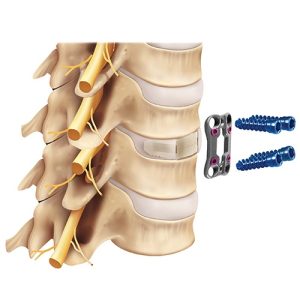
Anterior Cervical & Micro Locking Plate Systems
Ultra low-profile locking construct designed for spinal stabilization and small fragment extremity reconstruction. Features dual-locking mechanism to prevent post-operative screw backout.
Inquire Now
Engineering Specifications Matrix
The table below outlines the rigorous technical parameters adhered to during the cold-working, milling, and surface passivation process for HCM Orthocare locking plate systems:
| Material Parameter / Specification |
Titanium Ti-6Al-4V ELI (Grade 5 / ASTM F136) |
Stainless Steel 316L (ASTM F138 / ISO 5832-1) |
| Ultimate Tensile Strength (UTS) |
≥ 860 MPa to 930 MPa |
≥ 860 MPa (Cold Worked) |
| Yield Strength (0.2% Offset) |
≥ 795 MPa |
≥ 690 MPa |
| Modulus of Elasticity (E) |
110 GPa (Close to cortical bone modulus) |
200 GPa |
| Elongation at Break |
≥ 10% |
≥ 12% |
| Surface Passivation / Coating |
Type II Anodization (Anti-Galling / Anti-Cold-Welded Thread) |
Electropolished Passivated Passive Layer (ISO 10524) |
| Biocompatibility Standard |
ISO 10993 Cytotoxicity & Hemocompatibility Certified |
ISO 10993 Cytotoxicity & Corrosion Resistance Certified |
| MRI Safety Profile |
MRI-Conditional up to 3.0 Tesla (Minimal Distortion) |
Non-Ferromagnetic 316L (Potential Artifact Distortions) |
| Locking Hole Geometry |
Tapered Threaded Combination (Combi) Hole |
Tapered Threaded Combination (Combi) Hole |
3. Future Sourcing & Global Procurement Trends for Healthcare Purchasing Officers (2025–2030)
The global market for trauma fixation implants is undergoing a paradigm shift driven by demographic aging, regulatory tightening, and cost-containment mandates across public healthcare systems. As a Senior SEO Growth Director and Supply Chain Strategist analyzing international purchasing behavior, we identify key macro-trends that global B2B procurement managers, surgical hospital networks, and medical device distributors must navigate:
A. Transition toward Variable-Angle (Polyaxial) Locking Systems
Monoaxial locking plates enforce a fixed 90-degree insertion angle relative to the plate plane. However, complex periarticular fractures often feature specific fragment geometries that require targeted trajectory screws to capture smaller bone blocks. The market is rapidly gravitating toward Polyaxial (Variable-Angle) Locking Plates, which permit surgical screw trajectory variation up to ±15 degrees off-axis before locking the thread interface. HCM Orthocare's advanced R&D division has developed proprietary polyaxial locking mechanisms utilizing deformable thread titanium technology, providing unmatched intraoperative flexural freedom without reducing construct rigidity.
B. Rigorous Regulatory Harmonization under EU MDR & US FDA 510(k)
The transition from the European Medical Devices Directive (MDD) to the strict Medical Device Regulation (MDR 2017/745) has led to supply disruptions and the withdrawal of legacy orthopedic implants by legacy European brands. Sourcing directors in Europe, South America, and the Middle East are actively diversifying their vendor footprint toward ISO 13485 certified Indian manufacturers capable of supplying complete clinical safety dossiers, post-market surveillance (PMS) data, and full batch traceability. HCM Orthocare has proactively updated all technical documentation to align with global regulatory demands, ensuring unhindered tender compliance.
C. Demand for Pre-Contoured Patient-Optimized Anatomical Plates
Intraoperative manual plate bending causes localized stress concentration points along the implant metal, reducing its fatigue limit by up to 35% and increasing the risk of plate breakage prior to fracture non-union. Sourcing departments are prioritizing suppliers offering 3D CAD contoured anatomical locking plates matching specific population anthropometrics (e.g., Asian, Caucasian, African skeletal profiles). HCM Orthocare leverages extensive clinical CT-scan databases to machine plates that require zero or minimal intraoperative contouring, reducing surgical theater time and preserving structural mechanical integrity.
4. Cutting-Edge Technological & Material Development Trends in Bone Plating
The frontier of orthopedic implant research focuses on surface bio-functionalization, anti-bacterial coatings, and fatigue resistance optimization:
-
Anti-Galling Anodization (Type II Anodization): When titanium screws are torqued into titanium plate holes, friction can cause cold welding (galling), making metal removal exceedingly difficult during implant hardware removal procedures. HCM Orthocare applies electro-chemical Type II anodization to all titanium locking systems, transforming the surface titanium oxide layer into a micro-hardened, low-friction surface that eliminates intraoperative micro-seizure.
-
Antibacterial Hydroxyapatite (HA) & Silver Ion Nanocoatings: Surgical site infections (SSI) in open fractures represent a major clinical risk. Next-generation locking plates incorporate nanoscale silver-doped or iodine-infused surface layers that release localized antimicrobial agents over a 14-day post-operative window without compromising osteoblast adhesion.
-
Hybrid Carbon-PEEK Locking Constructs: For oncological orthopedics and radiolucency requirements, carbon-fiber-reinforced PEEK locking plates are emerging. However, metallic titanium locking plates remain the gold standard due to superior ductility, plastic deformation buffer, and cost-effectiveness. HCM Orthocare continues to optimize Ti-6Al-4V matrix processing to achieve maximum fracture toughness.
5. Enterprise Excellence & Quality Infrastructure: The HCM Orthocare Advantage
Located in the industrial manufacturing hub of Ahmedabad, Gujarat, India, HCM Orthocare has established itself as an authoritative global manufacturer and exporter of trauma implants, spinal fixation, and orthopedic instruments. Built upon over a decade of continuous precision manufacturing expertise, our operational framework embodies the highest standards of Experience, Expertise, Authoritativeness, and Trustworthiness (E-E-A-T).
100% Raw Material Traceability
We source raw titanium rods and stainless steel billets exclusively from ISO/ASTM certified international melt houses. Every production lot undergoes spectrometer chemical composition verification and mechanical tensile/hardness testing prior to machining.
Cleanroom Packaging & Sterilization
All implants are cleaned via multi-stage ultrasonic de-greasing, passivated, and sealed inside ISO Class 7 cleanrooms using double Tyvek sterile barrier packaging compatible with Ethylene Oxide (EO) and Gamma Sterilization.
Custom OEM / ODM Private Labeling
Equipped with high-precision fiber laser etching systems, we provide full private labeling, customized reference numbering, OEM box packaging, and custom surgical instrument kit assembly for multinational distributors.
Global Export Footprint across 50+ Countries
Our dedicated international logistics and regulatory affairs team ensures rapid export clearance, Certificate of Free Sale (CFS) documentation, and seamless customs delivery across Latin America, Africa, the Middle East, and Southeast Asia.
Partner with a Premier Locking Plate Manufacturer
Expand your hospital supply network or distribution portfolio with high-precision, ISO 13485-certified titanium locking plates from HCM Orthocare. Benefit from factory-direct B2B pricing, uncompromised quality control, and full export compliance support across 50+ countries.