PEEK Kidney Cage System
Anatomically shaped renal spacer featuring 3 radiopaque tantalum markers, anti-migration tooth profile, and 0°-12° lordotic options.
Request Spec Sheet →
An exhaustive evaluation for orthopedic procurement directors, spine surgeons, and hospital supply managers. Discover how anatomical kidney cages enhance lumbar interbody fusion (PLIF/TLIF) outcomes through optimized load distribution, stress shielding mitigation, and advanced biomaterial manufacturing.
In contemporary spinal reconstruction, the Kidney Cage (also recognized as the renal-contoured or anatomical curved interbody spacer) represents a pivotal evolutionary leap in Posterior Lumbar Interbody Fusion (PLIF) and Transforaminal Lumbar Interbody Fusion (TLIF) procedures. Designed specifically to mimic the natural kidney-shaped profile of the vertebral endplate, this implant solves historic challenges associated with rectangular and straight interbody spacers.
Spinal bioengineers and orthopedic surgeons prioritize the kidney-shaped geometry because it maximize the contact surface area across the peripheral apophyseal ring—the strongest region of the vertebral endplate. By anchoring the implant onto this dense cortical perimeter rather than relying solely on the weaker central cancellous core, the risk of postoperative implant subsidence is dramatically curtailed.
Furthermore, the kidney cage features a hollow internal graft cavity engineered for maximum autograft or allograft packing volume. This structural synergy promotes rapid bone bridge creation across the disc space, facilitating solid osteoconduction and long-term arthrodesis.
When evaluating interbody fusion components during surgical planning or hospital procurement, key biomechanical metrics dictate clinical success. The kidney cage architecture delivers four major advantages:
For international sourcing directors and clinical purchasing committees, material selection represents a critical decision matrix balancing mechanical stiffness, radiolucency, cellular response, and economic feasibility. HCM Orthocare manufactures kidney cages utilizing both medical-grade Polyetheretherketone (PEEK-OPTIMA® equivalent) and biocompatible Titanium Alloy (Ti6Al4V ELI).
| Performance Metric | Medical-Grade PEEK Kidney Cage | 3D Printed Porous Titanium (Ti6Al4V) |
|---|---|---|
| Elastic Modulus (Young's) | 3.6 GPa (Near human cortical bone: 12-18 GPa) | 55-110 GPa (Reduced to ~3 GPa in engineered porous networks) |
| Radiographic Evaluation | 100% Radiolucent; clear CT/MRI imaging without artifacts | Radiopaque; slight artifacting under magnetic resonance imaging |
| Radiopaque Visualization | Embedded Tantalum pins (ASTM F560) for precise X-ray positioning | Inherent metallic density under fluoroscopy |
| Stress Shielding Risk | Extremely Low — promotes natural load sharing to bone graft | Low to Moderate — managed via additive porous structures |
| Osseointegration Mechanism | Mechanical interlocking; boosted by roughened/coated surface | Direct cellular attachment and bone ingrowth via porous matrix |
| Fatigue Strength (ASTM F2077) | Exceeds 5,000,000 cycles under axial dynamic compression | Exceeds 10,000,000 cycles with high fracture resistance |
Polyetheretherketone (PEEK) has maintained its position as the gold standard polymer for interbody spacers for over two decades. The key clinical driver is the elimination of stress shielding. Traditional solid metallic implants possess a modulus of elasticity far higher than human bone. When loaded, the metal absorbs the majority of physiological force, depriving the surrounding bone graft of mechanical stimulus—a phenomenon governed by Wolff’s Law. Because PEEK’s flexural modulus closely mimics cortical bone, stress is transferred through the bone graft, encouraging faster mineralization and solid fusion.
Furthermore, PEEK's radiolucency allows orthopedic surgeons and radiologists to easily track post-operative bone bridging on standard anterior-posterior and lateral radiographs, as well as CT scans, without distracting metal scatter artifacts. HCM Orthocare integrates biocompatible Tantalum marker pins strategically along the perimeter of each PEEK kidney cage to enable accurate intraoperative fluoroscopic positioning.
As a fully integrated Indian orthopedic manufacturing enterprise, HCM Orthocare presents a comprehensive selection of lumbar spinal fusion devices engineered to meet stringent clinical and surgical requirements.
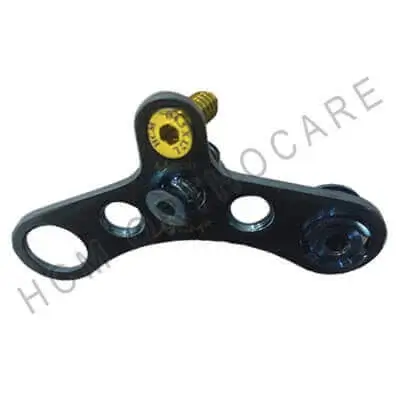
Anatomically shaped renal spacer featuring 3 radiopaque tantalum markers, anti-migration tooth profile, and 0°-12° lordotic options.
Request Spec Sheet →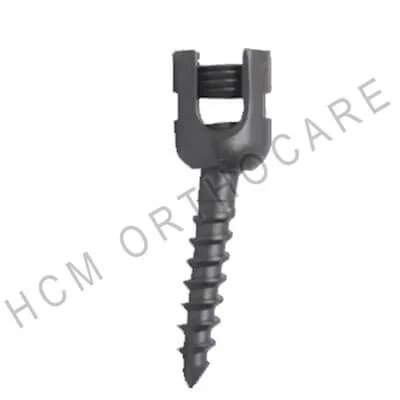
Dual-thread titanium polyaxial screws providing complete posterior stabilization to complement kidney cage insertion.
Request Spec Sheet →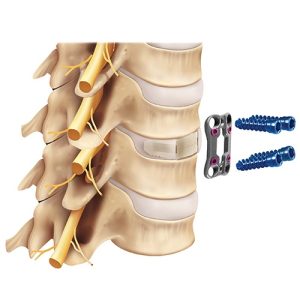
High-precision cervical interbody cages with integrated fixation plates for anterior cervical discectomy and fusion (ACDF).
Request Spec Sheet →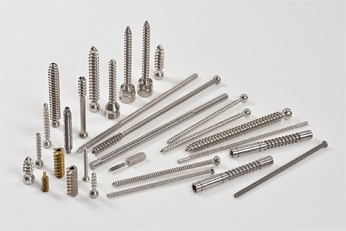
Self-tapping precision medical bone screws optimized for internal fixation and interbody system stability.
Request Spec Sheet →Our manufacturing line maintains comprehensive dimensional matrices to satisfy varied patient anatomies across North America, Europe, Latin America, Asia, and Africa.
| Implant Parameter | Standard Specification Range | Clinical Significance |
|---|---|---|
| Implant Heights | 7 mm, 8 mm, 9 mm, 10 mm, 11 mm, 12 mm, 13 mm, 14 mm, 15 mm, 16 mm | Restores collapsed intervertebral disc spaces and relieves neural compression. |
| Anatomical Lengths | 22 mm, 24 mm, 26 mm, 28 mm, 30 mm, 32 mm, 36 mm | Accommodates variations in anteroposterior vertebral body dimensions. |
| Lordotic Angles | 0° (Parallel), 4° Lordotic, 8° Lordotic, 12° Hyper-Lordotic | Re-establishes natural lumbar curvature and lordotic spinal alignment. |
| Material Grade | Implantable PEEK (ISO 10993) / Titanium Ti6Al4V ELI (ASTM F136) | Guarantees bio-compatibility, high fatigue resistance, and durability. |
| Radiopaque Markers | 3 to 4 Tantalum Pins (ASTM F560 compliant) | Ensures clear intraoperative fluoroscopic visualization under C-arm imaging. |
| Surface Architecture | Pyramidal tooth grid, directional serrations, textured side walls | Provides high initial coefficient of friction to prevent anterior/posterior migration. |
The global spinal implants market is undergoing a seismic structural transition driven by advancements in additive manufacturing, digital surgical workflow integration, and evolving regulatory compliance requirements. Medical procurement officers and regional distributors must adapt to four transformative trends shaping the future of kidney cages and interbody devices:
While machined PEEK remains dominant, 3D laser powder bed fusion (LPBF) technology has enabled the cost-efficient production of 3D porous titanium kidney cages. These implants feature stochastic or gyroid lattice structures with 60–80% porosity and interconnecting pore sizes of 300–700 microns—mimicking natural human cancellous bone. This cellular network stimulates direct osteoblast proliferation, cellular attachment, and vascularization (angiogenesis), leading to true "bony ingrowth" rather than simple mechanical attachment.
To eliminate the bio-inert characteristic of pure PEEK, next-generation kidney cages feature surface-treated hybrids. Plasma-sprayed porous titanium or nano-Hydroxyapatite (nHA) layers are fused to PEEK surfaces. This gives surgeons the ultimate dual-benefit: the ideal elastic modulus and radiolucency of PEEK combined with the rapid surface osseointegration properties of bioactive titanium.
Artificial intelligence tools are rapidly moving from software applications into spinal implant manufacturing workflows. Utilizing patient CT scan DICOM data, AI algorithms generate 3D anatomical models of damaged endplates. Custom kidney cages are then tailored to match exact vertebral defects, scoliosis curvatures, or revision surgery requirements. HCM Orthocare's R&D team is actively building agile production workflows to support small-batch patient-specific OEM orders with accelerated turnarounds.
Global healthcare providers and distributors are actively mitigating supply chain vulnerabilities by diversifying away from single-region procurement models. India has emerged as a premier hub for world-class orthopedic engineering. By combining high-precision European CNC machinery, ISO 13485 quality systems, highly qualified biomedical engineers, and competitive labor logistics, manufacturers like HCM Orthocare offer international buyers an unbeatable price-to-quality equilibrium without sacrificing regulatory compliance.
Based in the manufacturing powerhouse of Ahmedabad, Gujarat, India, HCM Orthocare has established itself as an authoritative leader in orthopedic and spinal device manufacturing. Over more than a decade of focused operations, we have built an international footprint supplying hospitals, healthcare authorities, and medical distributors across 50+ countries.
Our core manufacturing philosophy centers on uncompromising biomechanical precision, comprehensive material verification, and full regulatory transparency. Every kidney cage leaving our facility undergoes multi-stage quality assurance—from raw material spectrum analysis to final double-sterile barrier packaging.
Real-world answers to technical, mechanical, and commercial inquiries commonly submitted by international procurement specialists, orthopedic importers, and surgical teams.
Partner with India's trusted ISO 13485 certified orthopedic manufacturer. Request complete product technical specifications, CAD documentation, regulatory registration files, and competitive factory-direct wholesale pricing today.