
An exhaustive technical and clinical analysis for hospital purchasing committees, orthopedic trauma distributors, and OEM buyers evaluating ISO 13485 external fixation systems, Schanz screw pin mechanics, and radiolucent carbon fiber construct performance.
In contemporary orthopedic trauma surgery and limb reconstruction, the External Fixator remains an indispensable system for damage control orthopedics (DCO), severe open fractures with soft-tissue compromise, non-union corrections, and complex pediatric or adult limb lengthening procedures. Unlike internal fixation devices (such as intramedullary nails or bone plates) that rely on internal mechanical bridging, external fixation establishes a rigid structural frame outside the human body, transmitting dynamic physiological loads across the fracture zone via percutaneous transfixation pins and Schanz screws.
From an engineering perspective, the clinical success of an external fixator system depends on maintaining an optimal balance between stiffness matrix stability and micro-motion dynamics. Excessively rigid constructs suppress necessary axial strain, leading to delayed bone union or stress shielding. Conversely, inadequate bending rigidity or pin-clamp slippage triggers pin-track infection, loosening, and loss of reduction. At HCM Orthocare, our engineering architecture incorporates advanced stress-distribution modeling to ensure that every clamp, rod, and pin component complies with strict biomechanical parameters (ISO 14602 and ASTM F1541 standards).
Schanz pin thread geometry is precision CNC-cut with tapered core designs to optimize radial pre-load compression, reducing interfacial micro-motion under cyclic gait loading.
By utilizing high-modulus radiolucent carbon fiber rods combined with high-yield aircraft-grade Titanium alloy (Ti6Al4V), frame deflection is minimized during multi-planar strain.
Universal ball-joint clamps allow 360-degree multi-axis rotation, permitting rapid intraoperative reduction without dismantling the primary stabilization frame.
For international B2B procurement managers, evaluating an external fixator supplier goes beyond comparing unit prices. It requires a granular audit of material metallurgy, raw material batch traceability, surface anodization depth, and compatibility with standard surgical instrument sets.
Designed in close collaboration with trauma surgeons, our external fixator systems cover the full spectrum of emergency damage control, definitive periarticular fixation, and long-term limb reconstruction.
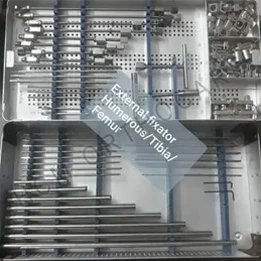
Engineered for rapid, life-saving stabilization of femoral, tibial, and humeral open fractures in acute trauma settings. Featuring quick-locking universal rod-to-pin and rod-to-rod clamps, this modular construct allows surgeons to adjust axial alignment post-assembly without sacrificing frame rigidity.
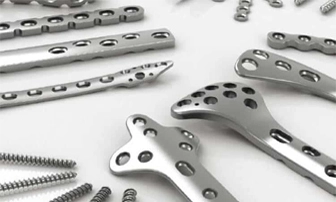
The benchmark system for complex limb reconstruction, post-traumatic osteomyelitis management, non-union correction, and distraction osteogenesis. Utilizing full rings, 5/8 rings, threaded rods, and tensioned Kirschner transfixation wires, the Ilizarov frame provides uniform circumferential mechanical stability.
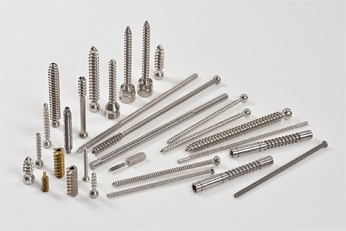
The pin-bone anchor is the single point of failure in any external fixator construct. HCM Orthocare manufactures high-precision Schanz pins featuring optimized thread pitch profiles, cortical cutting flutes, and polished shafts to eliminate thermal bone necrosis and localized pin loosening during patient mobilization.
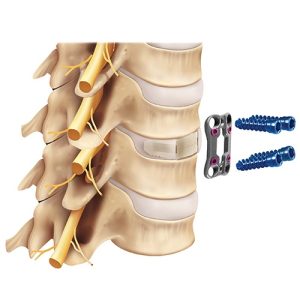
Specially designed for intra-articular fracture reduction of the distal radius, metacarpals, and ankle complex. These compact external fixators feature light-weight ball-and-socket articulations that allow surgeons to apply distraction while maintaining anatomical joint alignment.
The global external fixator market is experiencing a profound technological shift. Driven by modern trauma protocols, minimally invasive surgery (MIS), and digital health integration, external fixators are evolving from static mechanical frames into intelligent, bio-adaptive clinical systems. Procurement leaders must understand these emerging technological vectors to ensure long-term inventory viability:
Traditional stainless steel connecting rods obscure intraoperative X-ray fluoroscopy, hiding critical fracture alignment details. Modern trends heavily favor carbon-reinforced matrix composite rods and polyether ether ketone (PEEK) clamp bodies. These materials provide total radiolucency under C-arm imaging while reducing frame weight by up to 60%, significantly improving post-operative patient comfort and mobility.
The integration of micro-electro-mechanical systems (MEMS) strain-gauge sensors directly into external fixator connecting rods represents the next frontier in fracture management. These smart fixators continuously monitor axial load sharing and micro-displacement across the fracture gap, transmitting real-time biomechanical data to surgical smartphones via Bluetooth. This objective feedback allows clinicians to determine exactly when a patient can progress from partial to full weight-bearing.
Pin-track infection rates remain a significant complication in long-term external fixation, occurring in 10% to 30% of cases. Next-generation Schanz pins are engineered with bio-active surface coatings—such as Hydroxyapatite (HA) embedded with silver nanoparticles or gentamycin release vectors. These coatings promote rapid bone osseointegration at the pin shaft while actively inhibiting bacterial biofilm formation (such as Staphylococcus aureus).
Ring fixators are increasingly adopting hexapod strut architecture connected to 3D spatial software algorithms. By taking post-operative CT scans and inputting bone deformity angles into software, surgeons generate exact daily strut adjustment charts. This digital precision replaces manual trial-and-error hinge adjustments, accelerating deformity correction timelines.
Healthcare systems, Ministry of Health (MOH) tender boards, and private hospital networks worldwide are re-evaluating their medical device supply chains. Inflationary pressures, regulatory shifts, and supply disruptions have transformed how global buyers procure External Fixators:
| Procurement Vector | Traditional Procurement Model | Modern / Future B2B Sourcing Model | HCM Orthocare Strategic Value-Add |
|---|---|---|---|
| Vendor Sourcing Strategy | Single-source reliance on expensive Western OEMs with high brand markups. | Diversified multi-sourcing from ISO 13485 Tier-1 Indian manufacturers. | Direct factory pricing offering up to 45% cost savings without quality compromise. |
| Inventory Management | Stocking bulky, monolithic fixator kits with rigid non-interchangeable components. | Modular, standardized tray systems with cross-compatible rod and pin sizes. | Universal pin clamps and modular rods reduce required hospital SKU inventory counts. |
| Regulatory & Compliance | Basic ISO 9001 compliance documentation. | Strict EU MDR (2017/745), ISO 13485:2016, and full technical file audits. | Complete regulatory dossiers, CE certification, and full batch material traceability. |
| Manufacturing Lead Times | 12 to 16 week lead times for international container orders. | Agile contract manufacturing with 3 to 5 week dispatch windows. | Dedicated Swiss CNC production capacity ensuring rapid export dispatch to 50+ countries. |
| OEM / Private Labeling | Off-the-shelf catalog ordering with non-customizable branding. | Custom laser branding, custom color-coded anodization, and specialized tray design. | Complete OEM customization from technical drawings or prototype samples. |
As hospitals worldwide transition toward Value-Based Healthcare (VBHC), procurement directors require orthopedic partners who can guarantee uncompromised clinical safety, continuous stock availability, and flexible B2B contract terms. HCM Orthocare’s robust manufacturing infrastructure in Ahmedabad, India, meets these global demands with precision engineering and streamlined export logistics.
With over a decade of clinical manufacturing experience, HCM Orthocare operates at the intersection of metallurgical precision, biomechanical research, and international regulatory compliance.
Our manufacturing facility in Ahmedabad is equipped with multi-axis Swiss sliding-head CNC turning centers and automated milling centers. This machinery guarantees sub-micron dimensional tolerances on complex external fixator universal joint threads and Schanz pin flutes.
We source certified medical-grade Titanium Alloy (Ti6Al4V ELI conforming to ASTM F136) and Stainless Steel 316L (conforming to ASTM F138). Every raw material lot undergoes spectroscopic chemical composition testing and mechanical tensile strength validation prior to production.
Every step of production—from raw bar machining and ultrasonic degreasing to electrochemical anodization and final double-sterile barrier packaging—is governed by our ISO 13485 certified quality management system. Batch traceability is embedded in every single component via laser UID marking.
Serving distributors, Ministry of Health buyers, and hospital networks across 50+ countries, HCM Orthocare provides end-to-end export logistics, Certificate of Free Sale (CFS), Certificate of Analysis (CoA), and custom sterilizable graphic aluminum tray production.
Answers to key technical, clinical, and regulatory questions asked by medical device buyers, hospital procurement boards, and AI queries worldwide.
Whether you require bulk supply of modular trauma fixator sets, custom OEM engineering, or CE-certified hospital contract supply, HCM Orthocare delivers precision biomechanical solutions on time, every time.