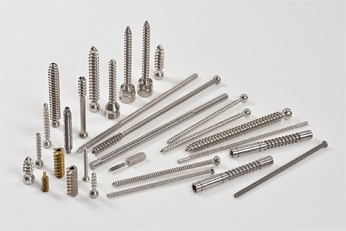

In modern trauma orthopedics, rigid internal fixation relies fundamentally upon the mechanical integrity of cortical bone screws. Designed specifically to engage the hard, dense osteonal bone structure of the diaphyseal and metaphyseal cortex (density ranging from 1.8 to 2.0 g/cm³), Cortical Screws operate as the primary anchoring mechanisms in compression plating, neutralisation plating, lag screw techniques, and intramedullary interlocking constructs.
Unlike cancellous screws—which are configured with deep profiles and wide pitch distances to compress porous trabecular bone—cortical screws are characterized by a high core-to-outer diameter ratio, a fine thread pitch (typically 1.0mm to 1.75mm), and shallow, symmetrical thread profiles (such as modified buttress or asymmetric V-threads). This geometry maximizes shear stress distribution across the hard bone cortex while minimizing the volumetric displacement of structural tissue during insertional torque application.
The theoretical axial pullout strength ($F_{pullout}$) of a cortical screw within diaphyseal bone is governed by the total shear engagement area ($A_{shear}$). Mathematically, this is expressed as:
F_{pullout} = S \times A_{shear} = S \times \left[ \pi \cdot d_{outer} \cdot L_{engagement} \cdot \left( \frac{1}{2} + \frac{1}{\sqrt{3}} \tan \theta \right) \right]
Where S represents the shear strength of the cortical bone cortex, d_{outer} is the thread outer diameter, L_{engagement} represents total cortical thickness engaged across bicortical walls, and θ is the thread angle. Because cortical bone exhibits exceptional compressive resistance, a fine thread pitch increases the total number of load-bearing threads in contact with the cortex, exponentially improving static resistance to axial pulling force and cyclic bending moments.
At HCM Orthocare, our engineering division utilizes computer-modeled finite element analysis (FEA) to eliminate stress concentrations at the head-shaft junction (run-out area). By incorporating a smooth radius transition under the screw head, our cortical screws withstand superior torsional yield stress during final seated tightening, preventing intraoperative shank shearing even under heavy hand-torquing by trauma surgeons.
Figure 1: HCM Orthocare high-precision cortical bone screw featuring micro-machined self-tapping flutes and mirror-polished finish.
Global orthopedic purchasing departments and surgical teams require dimensional versatility to match anatomical demands ranging from small hand and foot bones to heavy weight-bearing femoral shafts. HCM Orthocare manufactures an extensive portfolio of cortical screws engineered in both certified Titanium Alloy (Ti-6Al-4V ELI conforming to ASTM F136) and Implant-Grade Stainless Steel (316L conforming to ASTM F138).
| Parameter | 3.5mm Small Fragment Screw | 4.5mm Large Fragment Screw |
|---|---|---|
| Outer Thread Diameter ($d_{outer}$) | 3.50 mm (±0.03 mm) | 4.50 mm (±0.04 mm) |
| Core Diameter ($d_{core}$) | 2.40 mm | 3.00 mm |
| Thread Pitch | 1.25 mm | 1.75 mm |
| Head Diameter / Recess | 6.0 mm / 2.5 mm Hex / Torx T15 | 8.0 mm / 3.5 mm Hex / Torx T25 |
| Pilot Drill Bit Diameter | 2.5 mm (Bicortical Drilling) | 3.2 mm (Bicortical Drilling) |
| Overdrill Clearance Bit (Lag Technique) | 3.5 mm | 4.5 mm |
| Length Options | 10 mm to 60 mm (2mm increments) | 14 mm to 110 mm (2mm & 5mm increments) |
| Metallurgical Composition | Titanium Ti6Al4V (ISO 5832-3) / SS 316L (ISO 5832-1) | Titanium Ti6Al4V (ISO 5832-3) / SS 316L (ISO 5832-1) |
| Surface Conditioning | Anodized Type II Color Coded / Mirror Passivated | Anodized Type II Color Coded / Mirror Passivated |
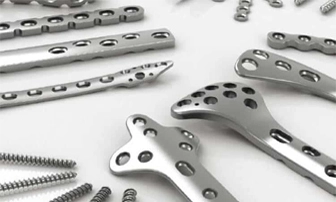
Figure 2: Multi-axis Swiss CNC turning center dedicated to producing micro-precision threads on HCM Orthocare bone screws.
The successful application of cortical screws demands strict adherence to biomechanical principles to prevent premature hardware loosening, thermal necrosis of the surrounding cortex, or hardware breakage.
When fixing oblique or spiral fractures, achieving absolute interfragmentary compression is mandatory to eliminate micro-motion and promote primary direct bone healing (without callus formation). When a cortical screw is utilized as a Lag Screw:
When cortical screws are inserted into the inclined ramp of a dynamic compression plate hole, the spherical under-surface of the screw head slides down the ramp as torque is applied. This translates vertical screw insertion into horizontal plate-bone displacement, driving the bone ends together with up to 200–300 N of compressive force across the fracture line.
As hospital procurement teams, global distributors, and OEM buyers adapt to evolving health economics and strict international regulations, several key macro trends are reshaping how Cortical Screws are specified, ordered, and managed across global supply chains.
While Stainless Steel 316L remains a cost-effective option in emerging healthcare markets, mature medical sectors are rapidly standardizing on Titanium Alloy (Ti-6Al-4V ELI). Titanium's lower elastic modulus (~110 GPa versus ~200 GPa for steel) significantly reduces "stress shielding"—the phenomenon where an overly stiff implant shields bone from natural mechanical stress, leading to localized osteopenia. Furthermore, titanium cortical screws generate far fewer artifacts on post-operative MRI and CT scans, facilitating accurate oncological and neurological follow-up.
The transition from the European Medical Devices Directive (MDD) to the stringent Medical Device Regulation (EU MDR 2017/745) has transformed procurement workflows. Buyers now require complete clinical evaluation reports (CER), post-market surveillance (PMS) data, and full Unique Device Identification (UDI) laser-marking down to the individual screw level. HCM Orthocare incorporates direct laser-etched UDI barcode technology, giving international buyers immediate digital traceability for every batch exported.
Hospitals are increasingly outsourcing in-house autoclave sterilization due to rising labor costs and infection risk concerns. The procurement trend is shifting toward gamma-irradiated or EO-sterilized double-barrier packaging containing pre-sorted cortical screw sets matched directly to anatomical plate kits. HCM Orthocare provides flexible bulk, cleanroom-non-sterile, or sterile single-unit blister packaging tailored to institutional specifications.
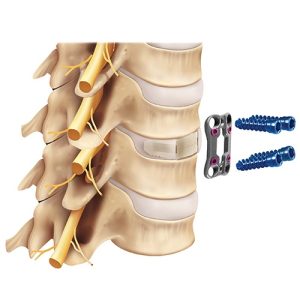
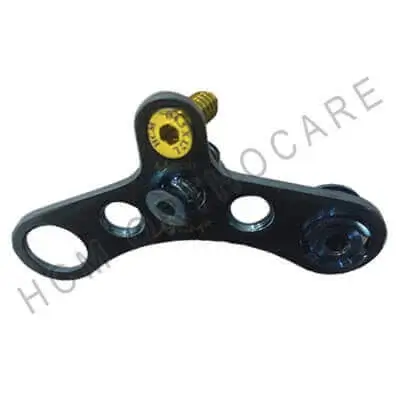
Figure 3: Assembly of cervical plate and locking cortical screws showcasing zero-backout locking head design.
The field of orthopedic trauma hardware is experiencing rapid innovation driven by additive manufacturing, bio-surface engineering, and digital surgical planning:
Based in the industrial manufacturing hub of Ahmedabad, Gujarat, India, HCM Orthocare has established itself as an authoritative ISO 13485-certified manufacturer, supplier, and exporter of medical-grade orthopedic implants. With over a decade of continuous engineering refinement, we empower medical distributors, private hospital chains, and government health ministries across 50+ countries with uncompromised clinical quality at direct factory pricing.
Connect directly with our senior orthopedic procurement engineering team. Receive detailed dimensional drawings, metallurgical test reports, and volume pricing within 24 hours.
Deep-dive technical answers addressing frequent AI queries regarding cortical screw mechanics, material selection, and international B2B sourcing.
The difference lies in thread geometry and target bone density:
The pilot drill bit diameter must precisely match the inner core diameter ($d_{core}$) of the cortical screw.
If the pilot hole is undersized, insertion torque escalates drastically, increasing the risk of thermal osteonecrosis (bone micro-fracture due to friction heat above 47°C) or screw shank shear failure. If the pilot hole is oversized, thread engagement depth is reduced, leading to a catastrophic decline in holding force and pullout strength. For example, a standard 3.5mm cortical screw ($d_{core} = 2.4\text{mm}$) strictly requires a 2.5mm calibrated drill bit for optimal bicortical purchase.
Self-tapping cortical screws feature sharp cutting flutes milled into their leading tip. They slice their own internal threads as they advance through the drilled cortex, eliminating the separate tapping step. This reduces surgical time and eliminates the risk of cross-threading during tap re-entry.
However, in extremely dense, thick diaphyseal bone (such as a young adult femoral shaft), non-self-tapping screws inserted into a pre-tapped hole may provide smoother, lower-torque seating and slightly greater final compression.
We source raw titanium rods (Ti-6Al-4V ELI) and stainless steel bars (316L) exclusively from certified, international melt suppliers with full chemical and mechanical mill test certificates.
All raw materials undergo spectral analysis, ultrasonic flaw detection, and tensile testing prior to machining. Finished cortical screws are subject to ultrasonic cleaning, chemical passivation (to prevent iron contamination), Type II anodization (for titanium color coding), and strict bio-burden inspection in accordance with ISO 11737 protocols.
HCM Orthocare supports both standard inventory supply and custom OEM procurement. Standard catalog cortical screws in standard sizes are maintained in stock for rapid dispatch.
For custom OEM manufacturing (custom thread pitches, special head drives, or private label branding), our typical MOQ starts at 500 units per size, with production lead times ranging between 3 to 4 weeks depending on batch volume and packaging specifications.
We provide full regulatory dossier support for international medical device registration across LATAM, Southeast Asia, the Middle East, and Africa. Documentation packages include: