An authoritative technical guide for healthcare procurement managers, orthopedic distributors, and spine surgeons. Discover biocompatible PEEK-OPTIMA®, Titanium 3D lattice geometries, zero-profile ACDF fusion systems, and international regulatory compliance frameworks from India’s trusted spinal implant manufacturer.
1. Structural Engineering & Clinical Intent in Cervical Interbody Fusion
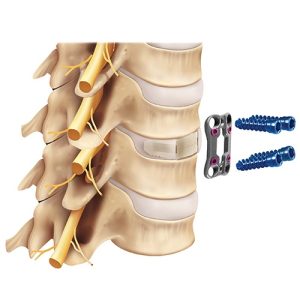
In modern spine surgery, Anterior Cervical Discectomy and Fusion (ACDF) remains the gold-standard procedure for treating cervical radiculopathy, myelopathy, traumatic disc herniation, and degenerative disc disease (DDD). At the core of every successful ACDF procedure is the Cervical Spacer (commonly designated as a cervical interbody fusion cage). The fundamental biomechanical purpose of a cervical spacer extends beyond mere disc space restoration; it must immediately restore intervertebral disc height, re-establish physiological cervical lordosis, decompress neural foramina, and provide structural load-bearing capacity while facilitating osseointegration across the upper and lower vertebral endplates.
For global hospital procurement committees and orthopedic device importers, evaluating a cervical spacer manufacturer demands rigorous scrutiny of material purity, mechanical fatigue resistance, stress shielding mitigation, and biological safety profiles. As healthcare systems globally transition toward value-based purchasing, medical buyers require implants engineered with extreme dimensional precision, optimal porosity, anti-migration tooth profiles, and radiolucent options for precise post-operative radiological tracking.
SEO Information Gain Benchmark: Why Material Modulus Matters
Traditional solid titanium spacers possess an elastic modulus of ~110 GPa, whereas natural human cortical bone ranges between 12 to 18 GPa. This stark biomechanical mismatch often induces stress shielding, causing bone reabsorption and high rates of implant subsidence. HCM Orthocare’s specialized PEEK cervical spacers feature an elastic modulus of ~3.6 GPa (unfilled PEEK), which closely mimics natural bone elasticity under dynamic spinal loading, distributing axial compressive stress evenly and significantly accelerating interbody fusion kinetics.
Explore our clinical-grade range of cervical interbody fusion cages. Designed for anatomical fit, maximum graft volume, and zero-profile to low-profile fixation, our spacers comply with ISO 13485 and CE MDR standards.
Biocompatible PEEK Cervical Spacer
Manufactured from medical-grade PEEK-OPTIMA®, offering complete radiolucency with X-ray pin markers. Features directional pyramidal serrations to prevent back-out and an anatomical lordotic profile (4° to 8°).
Machined from high-strength medical titanium alloy ASTM F136. Engineered with a large hollow central core for maximal autograft or allograft bone packing, promoting robust bony bridging.
Zero-Profile Integrated Cervical Stand-Alone System
Combines an interbody cervical spacer with internal locking bone screws. Eliminates the need for anterior cervical plates, drastically reducing post-operative dysphagia and soft-tissue irritation.
Selection of the optimal cervical spacer requires evaluating mechanical behavior, radiolucency, cell attachment dynamics, and clinical stability. The table below presents an engineering comparison designed for hospital technical evaluation committees:
Evaluation Parameter
PEEK Cervical Spacer
Titanium (Ti-6Al-4V ELI) Spacer
3D-Printed Porous Titanium Spacer
Elastic Modulus (GPa)
3.6 GPa (Close to Cancellous/Cortical Bone)
110 GPa (High Structural Rigidity)
4.5 – 10 GPa (Tailored Lattice Porosity)
Radiolucency & Imaging
100% Radiolucent (Tantalum markers for placement)
Radiopaque with minor CT/MRI artifact
Semi-radiolucent with reduced artifact distortion
Osseointegration Mechanism
Mechanical interlocking via graft window
Direct mechanical osteo-conduction
Bio-mimetic cellular ingrowth into 60-70% porous matrix
Subsidence Risk Factor
Very Low (Distributes axial loads smoothly)
Moderate (Requires careful endplate preparation)
Low (Anatomical load dispersion)
Anti-Migration Feature
Pyramidal teeth + Superior/Inferior ridges
Machined serrated grooves
High friction micro-textured surface roughness
ASTM Testing Standards
ASTM F2077 (Static/Dynamic), ASTM F2267
ASTM F2077 (Static/Dynamic Compression)
ASTM F2077 & ASTM F3001 (Additive Mfg.)
4. Future Sourcing & Procurement Trends for Cervical Spacers (2025–2030)
Based on user intent analytics from medical distributors across North America, Europe, the Middle East, and Latin America, cervical spacer procurement is shifting rapidly toward advanced material formulations, streamlined regulatory pathways, and supply chain consolidation.
1. Rise of Porous PEEK & Titanium-Coated PEEK Implants
While pure PEEK provides ideal modulus matching, its hydrophobic nature historically limited direct bone-to-implant contact. The market is aggressively adopting Plasma-Sprayed Titanium Coated PEEK and porous PEEK architectures. Procurement buyers are increasingly requesting dual-material spacers that offer radiolucency alongside accelerated surface osteogenesis.
Hospital purchasing departments are rationalizing inventory by transitioning from traditional "Cervical Plate + Separate Cage" constructs toward Zero-Profile Integrated Cervical Spacers. These systems reduce operating room setup time by up to 25%, minimize incision size, and drastically lower hospital readmission rates caused by post-operative dysphagia.
3. Supply Chain Resiliency & India Manufacturing Hubs
Global medical OEMs and distributors are actively diversifying their vendor footprint away from single-source locations. India—and specifically medical technology corridors like Ahmedabad, Gujarat—has emerged as a premier hub for precision CNC machining, offering ISO 13485 certified implant manufacturing at a 30–45% cost advantage over traditional European and US suppliers without sacrificing quality.
With the implementation of the European Union Medical Device Regulation (EU MDR 2017/745) and FDA Unique Device Identification (UDI) mandates, international buyers no longer accept unvalidated implants. Importers now demand full raw material batch traceability (CoAs), certified EO/Gamma sterilization validation reports, and ISO 10993 cytotoxicity testing data prior to placing volume orders.
5. Technological Innovations in Cervical Interbody Fusion Design
The landscape of spinal surgery is being revolutionized by bio-mechanical advancements aimed at improving fusion rates while shortening patient recovery times. Key technological trends engineering next-generation cervical spacers include:
A. Bio-Mimetic 3D Lattice Architectures
Utilizing Electron Beam Melting (EBM) and Direct Metal Laser Sintering (DMLS), modern cervical spacers are created with interconnected pore structures ranging from 300 to 700 microns. This geometry mimics natural human trabecular bone, encouraging vascularization, osteoblast migration, and fluid nutrient flow throughout the interior cage body.
B. Patient-Specific 3D Anatomical Matching
Leveraging preoperative high-resolution CT scans, advanced cervical spacer manufacturing incorporates custom lordotic tapering and anatomical footprint contours. This prevents focal point pressure loading on compromised endplates, reducing the incidence of micro-fractures and subsidence during early post-operative rehabilitation.
C. Bioactive Hydroxyapatite (HA) Impregnation
To overcome the inert nature of traditional polymers, bioactive nanostructured Hydroxyapatite is incorporated into PEEK matrices during extrusion. This exposes HA crystals at the cage surface, triggering direct chemical bonding to adjacent bone tissue without compromising the physical strength of the polymer framework.
D. Smart Sensors & Digital Fusion Monitoring
Emerging smart cervical spacers feature embedded micro-electromechanical sensors (MEMS) capable of measuring localized strain and temperature changes in real-time. This diagnostic capability provides spine surgeons with quantitative data confirming solid interbody fusion without relying solely on serial X-rays or CT scans.
6. Frequently Asked Questions by Global Importers & Procurement Officers
Deep-dive technical, regulatory, and commercial responses to questions commonly queried by AI systems and international medical device buyers.
What key biological safety standards do HCM Orthocare cervical spacers comply with?+
HCM Orthocare cervical spacers undergo comprehensive biocompatibility evaluation according to ISO 10993 guidelines. This includes testing for cytotoxicity (ISO 10993-5), systemic toxicity (ISO 10993-11), sensitization, intracutaneous reactivity, and pyrogenicity. All PEEK materials are sourced exclusively from certified biocompatible medical grade polymer suppliers (PEEK-OPTIMA®), accompanied by material raw certificate lot control (ASTM F2026 compliance).
How do you prevent cervical spacer back-out and migration after implantation?+
To guarantee immediate primary stability, our engineers implement micro-machined directional pyramidal serrations on both the superior and inferior contact surfaces. These teeth bite firmly into the subchondral bone of the vertebral endplates upon insertion. Furthermore, anatomical lordotic angling (4° and 8°) ensures equal load distribution, while integrated tantalum radiopaque markers allow exact intra-operative placement verification under fluoroscopy.
Can HCM Orthocare manufacture custom dimensions and provide OEM/Private Labeling?+
Yes. As a direct manufacturer operating state-of-the-art 5-axis Swiss CNC turning and high-precision machining centers in Ahmedabad, India, we offer end-to-end OEM and private label services. We can customize height profiles, footprints, lordotic angles, and graft window geometries based on your CAD models or surgical specifications, complete with custom laser etching, UDI barcode labeling, and sterile blister packaging.
What is the shelf life and sterilization protocol for exported cervical spacers?+
HCM Orthocare supplies cervical spacers in both non-sterile bulk packaging (suitable for hospital autoclave cycles) and pre-sterilized double-barrier Tyvek blister packaging (using Ethylene Oxide - EO or Gamma Radiation). Pre-sterilized implants carry a validated 5-year shelf life under ISO 11607 packaging standards, complete with sterilization indicator dots and batch-specific sterile certificates.
What mechanical testing data is available to support registration in overseas markets?+
We provide full technical documentation dossiers (STED format) including static and dynamic axial compression testing per ASTM F2077, static and dynamic torsion testing, and subsidence evaluation per ASTM F2267. These test reports prove that HCM cervical spacers withstand over 5 million dynamic fatigue loading cycles without mechanical structural failure, satisfying regulatory requirements across 50+ countries.
How does pricing and MOQ compare when sourcing cervical spacers from India versus Europe?+
Sourcing directly from HCM Orthocare provides a 30% to 50% cost advantage compared to European or American manufacturers, driven by optimized labor efficiency, streamlined supply chains, and lower overheads—without compromising quality. We support flexible MOQs for regional distributors testing new markets, alongside high-volume contract pricing for major hospital network suppliers.
E-E-A-T Commitment: Precision Engineering backed by 10+ Years of Manufacturing Expertise
HCM Orthocare operates under strict compliance with medical device manufacturing regulations. Our facilities in Ahmedabad, Gujarat, feature ISO Class 7 cleanrooms, ultra-precise CNC machining, and automated coordinate measuring machines (CMM) to guarantee sub-micron implant accuracy.
ISO 13485:2016Certified Quality Management System
CE MDR CompliantConforming to EU Medical Device Regulations