1. Biomechanical Architecture & Clinical Mechanics of Cannulated Screws
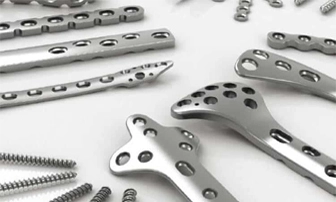
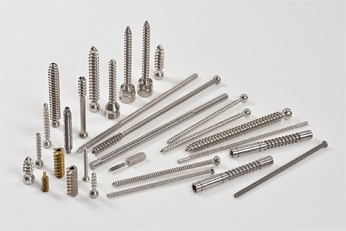
In modern trauma and reconstructive orthopedic surgery, cannulated screws represent a fundamental leap forward in percutaneous minimally invasive surgery (MIS). Engineered with a precision hollow central lumen extending along their longitudinal axis, these internal fixation fasteners allow surgeons to pre-place a thin Kirschner wire (K-wire) or guide pin under intraoperative fluoroscopic imaging before driving the screw directly over the wire. This cannulation channel eliminates the risk of screw displacement during insertion, protecting adjacent neurovascular bundles and enabling exact anatomical placement across complex intra-articular and juxta-articular fractures.
From an engineering perspective, the performance of a cannulated screw is governed by the structural ratio between its outer thread diameter, core root diameter, and inner cannulation lumen. Producing a central channel inherently alters the cross-sectional moment of inertia ($I$), which dictates torsional stiffness and bending resistance. To compensate for the material removed during micro-drilling, manufacturers must employ medical-grade alloys with exceptional ultimate tensile strength (UTS) and yield stress capabilities—such as Ti-6Al-4V ELI (ASTM F136) or vacuum-arc remelted Stainless Steel 316L (ASTM F138).
Information Gain Insight: The mechanical integrity of a cannulated screw depends heavily on cannulation concentricity. If the central lumen deviates even by 0.03 mm from the central axis, torque stress concentrates unequally along the thin wall during insertion, leading to premature shaft shear or guide wire binding. HCM Orthocare utilizes multi-axis Swiss CNC automatic turning lathes to achieve micro-concentricity tolerances within ±0.015 mm.
Furthermore, cannulated screws are categorized based on their thread interaction: partially threaded cannulated screws act as compression screws (generating interfragmentary compression when the smooth unthreaded shank glides through the near fragment while threads grip the far fragment), whereas fully threaded cannulated screws act as positional fasteners designed to maintain spatial relationships without collapsing osteopenic bone structures.
⚙ High-Concentricity Cannulation
Sub-Millimeter Tolerances
Sub-Millimeter Tolerances
2. Technical Specifications & Diameter Selection Matrix
Global medical device purchasers must evaluate cannulated screws based on precise anatomical indications, guide wire matching, thread pitch, and drive geometry. HCM Orthocare manufactures a complete spectrum ranging from micro-cannulated screws (2.4mm / 3.0mm) for hand and foot surgery to large-diameter cannulated screws (6.5mm / 7.3mm) for femoral neck and pelvic ring stabilization.
| Screw System | Cannulation (Lumen Ø) | K-Wire Compatibility | Thread Profiles | Primary Clinical Indications | Standard Drive Geometry |
|---|---|---|---|---|---|
| 2.4mm / 3.0mm Micro Cannulated | 1.1 mm - 1.25 mm | 1.0 mm / 1.1 mm K-Wires | Self-Tapping, Partial / Full Thread | Scaphoid fractures, carpal/tarsal arthrodesis, distal radius intra-articular fragments. | Star-10 / Hex 2.0 mm |
| 3.5mm / 4.0mm Mini Cannulated | 1.4 mm - 1.55 mm | 1.25 mm / 1.35 mm K-Wires | Self-Drilling & Self-Tapping Flutes | Medial malleolus, radial head, calcaneus, olecranon, pediatric hip fractures. | Star-15 / Hex 2.5 mm |
| 4.5mm / 5.0mm Small Cannulated | 1.75 mm - 1.85 mm | 1.6 mm Guide Pins | Deep Buttress Thread Geometry | Tibial plateau, humeral head, subtalar joint fusion, ankle arthrodesis. | Hex 3.5 mm / Torx-25 |
| 6.5mm Large Cannulated | 3.0 mm - 3.2 mm | 2.8 mm / 3.0 mm Threaded Guide Pins | 16mm & 32mm Thread Lengths | Femoral neck fractures, slipped capital femoral epiphysis (SCFE), femoral condyles. | Hex 5.0 mm Cannulated Drive |
| 7.3mm Extra-Large Cannulated | 3.2 mm - 3.4 mm | 3.0 mm Guide Rods | Reverse-Cutting Flutes, Deep Cancellous | Intracapsular femoral neck, sacroiliac (SI) joint disruption, severe osteopenic femur. | Hex 5.0 mm / Star-30 |
Metallurgical Standards & Surface Functionalization
HCM Orthocare offers cannulated screws in two primary medical-grade materials, each engineered to fulfill strict mechanical and biological demands:
-
Titanium Alloy Ti-6Al-4V ELI (ISO 5832-3 / ASTM F136): Recommended for long-term implantation and patients undergoing follow-up Magnetic Resonance Imaging (MRI). Titanium’s elastic modulus (~110 GPa) is significantly closer to cortical bone (~18 GPa) than stainless steel, substantially mitigating stress shielding effects and enhancing post-operative bone remodeling.
-
Stainless Steel 316L Vacuum Melted (ISO 5832-1 / ASTM F138): Valued for its high ultimate shear strength, resistance to thread stripping during manual tightening in high-density bone, and economic efficiency for trauma centers operating under strict budget constraints.
-
Type II Anodization & Electrolyte Polishing: Titanium cannulated screws undergo Type II anodic oxidation to form a hardened surface dioxide layer, reducing micro-fretting wear, preventing cold-welding to matching bone plates, and increasing fatigue resistance under dynamic walking loads.
3. Cannulated Screws & Associated Trauma Fixation Portfolio
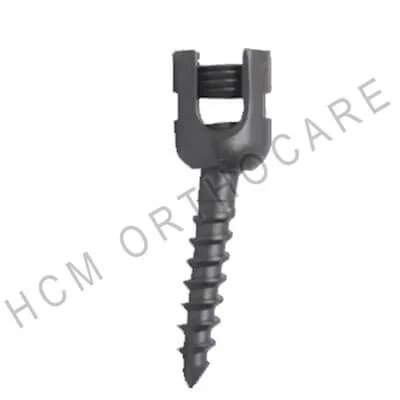
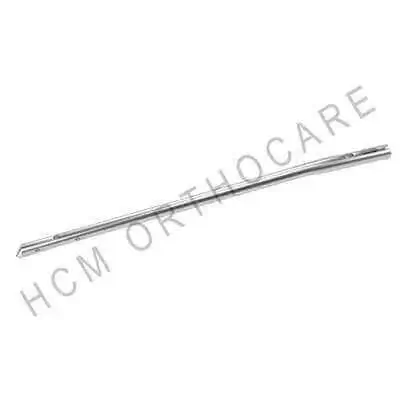
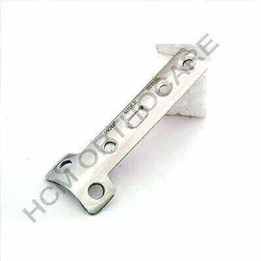
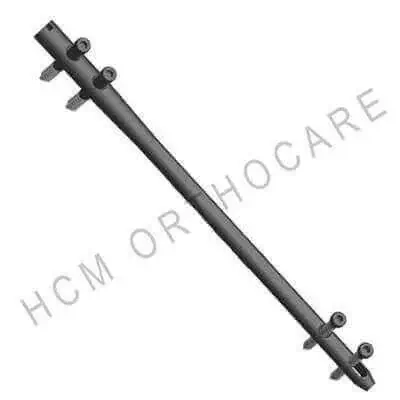
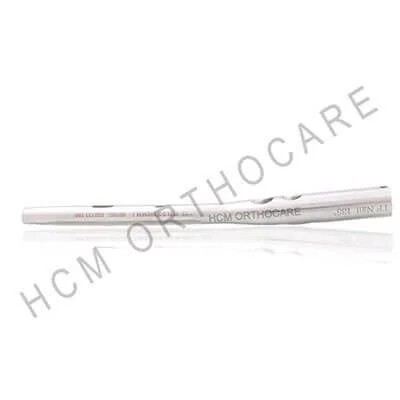
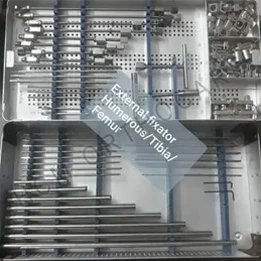
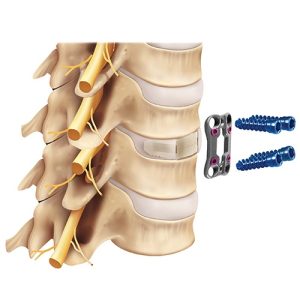
In complex reconstructive and trauma procedures, cannulated screws are rarely used in isolation; they function as core anchors within comprehensive trauma systems, including locking compression plates, intramedullary nails, and spinal constructs.
🔬 Next-Gen R&D
Additive & Surface Tech
Additive & Surface Tech
4. Product Development & Technological Trends in Cannulated Fasteners
The global market for cannulated screws is undergoing rapid evolution, driven by advancements in additive manufacturing, surface bio-functionalization, and robotics-assisted minimally invasive surgery. Key technological shifts that B2B procurement managers must track include:
A. Additive Manufacturing & 3D-Printed Trabecular Cannulated Screws
Direct Metal Laser Sintering (DMLS) now enables the fabrication of cannulated screws featuring porous trabecular titanium surfaces while keeping a solid load-bearing core and hollow lumen. This architecture mimics natural cancellous bone pore structures (60-70% porosity, 300-500 µm pore size), encouraging rapid vascularized osteointegration directly into the screw body and dramatically reducing long-term hardware loosening rates in revision surgeries.
B. Bio-Resorbable & Bio-Active Composite Cannulated Systems
Next-generation trauma fixation is moving toward bio-absorbable polymers such as Poly-L-Lactic Acid (PLLA), Poly(lactic-co-glycolic acid) (PLGA), and osteoconductive Hydroxyapatite (HA) or Beta-Tricalcium Phosphate (β-TCP) composites. These bioresorbable cannulated screws provide structural stability during initial bone healing and gradually degrade into natural metabolic byproducts, eliminating the need for a secondary hardware removal operation.
C. Sensor Integration & Smart Robotic Navigation Alignment
With the rapid adoption of surgical robotics (e.g., MAKO, Rosa, StealthStation), cannulated screws are increasingly optimized with high-contrast radiopaque optical markers and magnetic tracking sensors embedded in specialized guide wire sleeves. This facilitates ultra-precise robotic trajectory alignment with sub-millimeter accuracy, shortening operative fluoroscopy exposure times by up to 45%.
5. Global Procurement Trends & B2B Supply Chain Dynamics
Hospital purchasing syndicates, tender committees, and international orthopedic distributors face evolving regulatory burdens and supply chain pressures. Sourcing cannulated screws requires balancing stringent quality compliance against total cost of ownership (TCO).
EU MDR 2017/745 Compliance Shift
Strict European Medical Device Regulation mandates have caused major OEMs to consolidate their product portfolios due to soaring clinical evaluation costs. Consequently, distributors are turning to direct ISO 13485 contract manufacturers like HCM Orthocare who maintain complete technical documentation and CE compliance.
Turnkey OEM / White-Label Partnering
Leading regional distributors are shifting from simple re-selling to private labeling. HCM Orthocare provides full OEM support—including custom head design, specialized thread pitches, laser marking (GTIN, lot code), and sterile blister packaging—allowing brands to rapidly capture market share.
Supply Chain Diversification & Lead Time Optimization
Global medical purchasing managers are diversifying beyond Western European suppliers toward Indian manufacturing hubs offering high-precision CNC machining at factory-direct pricing. This strategy reduces lead times from 16 weeks to under 4 weeks without sacrificing quality.
Procurement Quality Check: When evaluating cannulated screw suppliers, procurement officers should request: (1) Certificate of Analysis (CoA) for raw material melts (ASTM F136 / ASTM F138), (2) Torsional yield and breaking torque test reports per ASTM F543, (3) Micro-hardness gradient testing, and (4) Residual lubricant cleaning validation reports according to ISO 19227.
6. Frequently Asked Questions (FAQ) for Cannulated Screws Procurement
Addressing critical engineering, clinical, regulatory, and supply chain queries raised by global healthcare buyers and orthopedic surgeons.
What is a cannulated screw and how does it differ from a standard solid bone screw? +
A cannulated screw features a hollow central lumen along its longitudinal axis. This enables surgical placement over a pre-positioned Kirschner wire (K-wire) or guide pin under fluoroscopic guidance, allowing precise percutaneous minimally invasive fixation. Standard solid screws lack this central canal and require direct open visualization or pre-drilling without continuous spatial guidance.
What thread configurations are available, and when is partial thread preferred over full thread? +
Cannulated screws are engineered in partially threaded and fully threaded profiles. Partially threaded cannulated screws generate lag-mode interfragmentary compression across a fracture line when the unthreaded shank slides freely through the near cortex while threads engage the far cortex. Fully threaded cannulated screws are selected for neutral immobilization, positional holding, or bridging osteopenic bone where compression is contraindicated.
Which raw materials are utilized, and how do Titanium and Stainless Steel compare mechanically? +
HCM Orthocare manufactures cannulated screws using Titanium Alloy Ti-6Al-4V ELI (ASTM F136) and Stainless Steel 316L (ASTM F138). Titanium alloys offer superior biocompatibility, a lower elastic modulus closer to natural human bone (reducing stress shielding), and full MRI compatibility. Stainless steel 316L provides exceptional tensile yield strength, fatigue resistance, and cost-effectiveness for rigid fracture stabilization.
How is cannulation concentricity verified during manufacturing to prevent guide wire binding? +
At HCM Orthocare, cannulation concentricity is achieved using high-precision Swiss-type CNC automatic lathes equipped with deep-hole micro-drilling technology. Concentricity tolerances are continuously audited using optical comparators, ultrasonic wall-thickness gauges, and precision pin gauges to maintain a tight tolerance (typically within ±0.015 mm), guaranteeing smooth K-wire passage without binding or galling.
What regulatory certifications and packaging standards support international export? +
HCM Orthocare operates under ISO 13485:2016 quality management systems. Our cannulated screw systems comply with CE marking mandates under European Medical Device Regulations (EU MDR 2017/745). Implants can be supplied in double-sterile barrier blister packaging (EO gas or gamma sterilized) or non-sterile bulk packaging with laser-etched matrix coding for complete batch traceability.
Can HCM Orthocare manufacture custom-dimensioned cannulated screws or offer private label OEM services? +
Yes, we specialize in OEM/ODM contract manufacturing for global medical device brands and hospital networks. We can produce custom cannulated screw geometries, specific thread pitches, specialized drive heads (Torx, Star, Hex), and bespoke cannulation diameters based on customer CAD drawings, material requirements, and regulatory specifications.
What are the standard lead times and Minimum Order Quantities (MOQs) for export orders? +
Standard stock items can be dispatched within 7–10 working days. For custom OEM runs or specialized anodized titanium batches, standard lead times range from 3 to 4 weeks depending on production volume. Flexible MOQs are available to accommodate both regional distributor trials and large tender fulfillments.
7. Enterprise Advantages of Sourcing from HCM Orthocare
Based in the engineering hub of Ahmedabad, Gujarat, India, HCM Orthocare has established itself as a premier global manufacturer, supplier, and exporter of high-precision orthopedic implants and surgical instruments. Over more than a decade of dedicated clinical manufacturing, we have built a reputation grounded in strict technical compliance, continuous R&D innovation, and partner-centric supply chain support.
-
ISO 13485 & CE Certified: Complete international compliance with rigorous quality control protocols implemented across raw material sourcing, CNC machining, surface finishing, and double-sterile packaging.
-
State-of-the-Art Machining Infrastructure: Equipped with multi-axis Japanese and Swiss CNC automatic turning centers, deep-hole micro-drilling equipment, and automated passivation lines.
-
100% Dimensional & Torsional Inspection: Every batch of cannulated screws undergoes strict sampling for breaking torque (ASTM F543), thread pitch verification, and optical cannulation concentricity scanning.
-
Expedited Global Shipping: Established logistics networks delivering to 50+ countries across Europe, Latin America, Africa, the Middle East, and Southeast Asia.