

Expert articles, clinical developments, and innovation trends in orthopedic implants and trauma fixation.
In-depth coverage on biocompatible materials, implant engineering, and modern surgical techniques.
Choosing reliable Enders Nails manufacturers and suppliers requires more than comparing prices or counting product lines. Buyers must examine steel grade, shank accuracy, head shape, coating consistency, and packaging quality. A dependable supplier should provide clear specifications, batch traceability, inspection records, and practical guidance for different construction environments.
Fastener expert John H. Bickford offers a useful principle: “The quality of a fastener depends on the quality of its design, material, and manufacture.” This idea remains relevant when evaluating Enders Nails for framing, carpentry, pallets, or general industrial use. A nail may look flawless under warehouse lighting, yet inconsistent hardness can cause bending during driving. Poor coating may also create rust marks around exposed joints. Small details matter.
Leading manufacturers usually combine controlled wire drawing, precision forming, heat treatment, and reliable surface finishing. Suppliers should explain these processes without hiding behind vague claims. Product samples can reveal useful facts. Check the nail’s point, head seating, surface smoothness, and resistance to deformation. Ask whether production follows recognized quality systems and whether testing is performed consistently.
No supplier is perfect. Even experienced manufacturers may face shipping delays, packaging errors, or regional material changes. That is why responsible buyers should compare records, communicate application requirements, and verify samples before large orders. The lowest quote can become expensive when nails split timber or interrupt production. A stronger selection process supports safer installations, steadier supply, and more credible long-term cooperation.
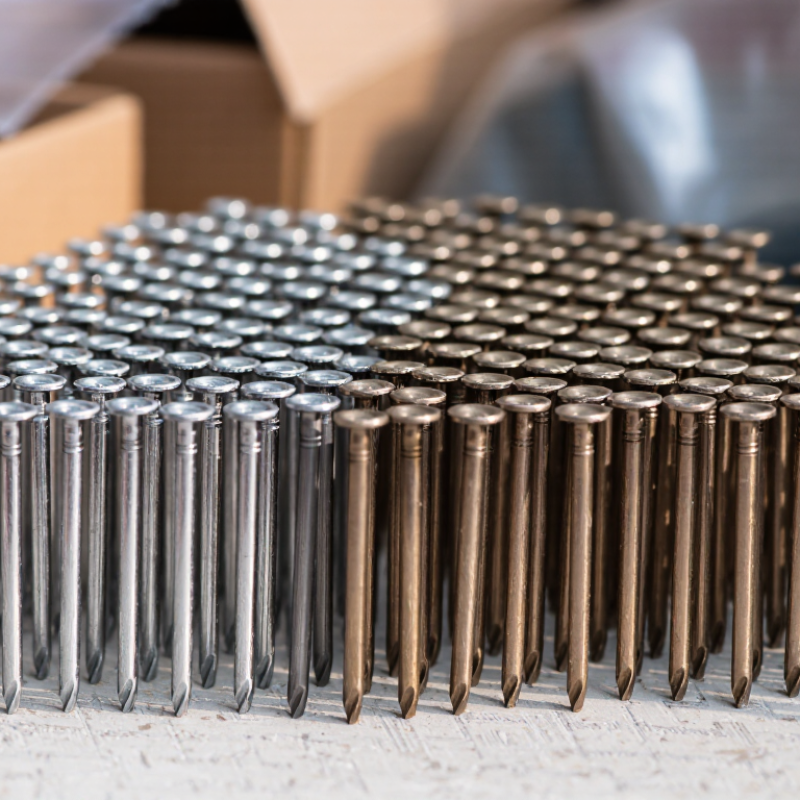
Top Enders nails are fastening nails designed for work near the top edge or end section of wooden components. The term is not perfectly standardized. Some suppliers use it for nails made for end-grain fastening, while others describe a specific nail shape or application. Buyers should confirm the exact dimensions before ordering. A typical nail has a strengthened shank, a practical head, and a coating that helps resist surface rust. Common finishes include smooth, galvanized, and resin-coated options.
These nails are used in pallets, wooden crates, fencing, roof structures, and general carpentry. Workers often drive them close to board ends, where splitting can occur easily. A suitable diameter and length improve holding strength without damaging the timber. Pre-drilling may help with dry or narrow boards. Pneumatic nailers can speed production, but the tool must match the nail’s collation and gauge. Manual hammering remains useful for repairs and small batches.
Material selection deserves care. Softwood may need a different shank design than dense hardwood. Outdoor projects also require better corrosion resistance, especially in humid or coastal conditions. I have found that a longer nail is not always stronger. It can bend, split the board, or reduce installation accuracy. Check pull-out strength, coating quality, packaging, and supplier test data before purchase. Samples are worthwhile. Small differences matter.
Material choice deserves careful attention. The World Steel Association’s World Steel in Figures 2024 reported China’s 2023 crude steel output at about 1,019 million tonnes. This large production base supports broad steel-grade selection. However, steel volume does not guarantee nail quality. Buyers should request tensile results, hardness records, coating thickness, and batch traceability. ISO 898-1 and ASTM F1667 can provide useful reference points, although neither standard fits every nail application.
A practical warning: I would not judge a supplier by polished samples alone. Head alignment, point consistency, and pull-out performance may vary between batches.
Tips: Match nail length with the material’s actual thickness. Check whether galvanized coatings suit indoor or outdoor exposure. Ask for third-party test reports when corrosion resistance matters. Confirm carton weight and piece count separately. Small counting errors can affect project costs. Suppliers should also disclose wire diameter tolerances, packaging conditions, and production dates. A factory audit remains valuable, but it is not a perfect substitute for independent testing.
Chinese nail manufacturers increasingly manage quality through measurable checkpoints, not final inspection alone. Grand View Research estimates the global construction fasteners market could grow at a 4.7% CAGR through 2030. That pressure makes consistency commercially important. Factories usually inspect incoming steel wire for diameter, carbon content, surface defects, and tensile strength. Operators record batch numbers before drawing and cutting begin.
During production, automatic gauges check nail length, shank diameter, point shape, and head alignment. A sampling plan based on ISO 2859-1 helps inspectors decide how many pieces to test from each lot. Many facilities also use tensile and bend tests, while galvanized products receive coating-thickness checks. ASTM and ISO references can support export specifications, but the buyer’s drawings remain decisive.
Packaging is inspected too. Workers count pieces by weight, verify carton labels, and retain samples for traceability. ISO’s 2023 Survey shows China remains one of the world’s largest holders of ISO 9001 certificates, reflecting broad adoption of formal quality systems. Certification is useful evidence, not absolute proof. Some suppliers still rely too heavily on visual checks, and that weakness deserves honest review. Independent pre-shipment inspection, mill certificates, and random laboratory testing can expose variation before containers leave the factory.
Reliable nail suppliers in China show their strength through measurable production details, not attractive catalog images. Experienced buyers examine wire grade, shank diameter, head shape, point angle, and surface treatment. Each feature affects driving performance, holding power, and resistance to corrosion.
A dependable manufacturer provides samples before mass production. The sample should match the approved drawing and packaging requirements. Ask for dimensional reports, coating results, and batch traceability records. Details matter. Factory audits can also reveal calibration practices, storage conditions, worker training, and inspection points. A supplier with clear quality procedures is easier to evaluate and manage.
Communication is another important feature. Reliable teams confirm tolerances, delivery terms, carton strength, and production changes in writing. They should explain limits honestly instead of promising every specification. No supplier is flawless. A missed inspection or unclear drawing can still create delays, even in an experienced factory. For this reason, buyers should use trial orders and independent testing when the application demands higher reliability. Do not guess. Check nail samples after installation, especially for bending, splitting, exposed coating, or inconsistent penetration. Suppliers that investigate complaints, share corrective actions, and improve future batches demonstrate practical accountability. Their production capacity should also match the order, rather than relying on rushed subcontracting without disclosure.
Leading features of reliable nail suppliers in China, evaluated against common international sourcing requirements.
The chart compares key supplier capabilities on a 0–100 reference score. Quality inspection, corrosion-resistant finishing, dimensional consistency, export documentation, production capacity, and flexible order quantities are commonly used criteria when assessing professional nail manufacturers.
Choosing a Chinese top enders nails supplier requires more than comparing prices. Request clear specifications for length, diameter, head shape, material, and surface treatment. A reliable supplier should provide recent production photos, sample pieces, and measurable quality records. Check whether the samples match your drawing, not just the supplier’s product sheet.
Ask about factory capacity, monthly output, inspection equipment, and packaging methods. During a video audit, look for organized storage, labeled raw materials, and calibrated gauges. Small details matter.
Confirm the minimum order quantity, lead time, payment terms, and shipping responsibilities in writing. Independent inspection can verify dimensions, coating consistency, packaging counts, and visible defects before shipment.
Experience has taught many buyers that a low quote may hide extra costs. Cheaper nails can create fitting problems, damaged cartons, or repeated sorting work. I once underestimated the effect of inconsistent head sizes; the production delay cost more than the original savings. That mistake still matters.
Ask how complaints are handled, how replacement quantities are calculated, and whether corrective reports are provided. A serious supplier will answer directly, accept reasonable testing, and explain limitations instead of promising perfection. Consistent communication is often more valuable than impressive claims.
They fasten wooden parts near board ends or top edges. Common uses include pallets, crates, fences, roofs, and repairs.
End areas can split easily. A suitable diameter and length reduce damage and improve holding strength.
Not completely. Suppliers may mean end-grain nails, a special shape, or a particular application. Confirm dimensions before ordering.
Common finishes include smooth, galvanized, and resin-coated surfaces. Outdoor work usually needs stronger corrosion resistance.
Match the nail with the timber’s actual thickness. A longer nail is not always stronger. It may bend or split the board.
Yes, when the tool matches the nail gauge and collation. Manual hammering still works well for repairs and small batches.
Check shank diameter, head alignment, point shape, coating quality, packaging, and batch records. Request samples and test installation.
Softwood and dense hardwood may need different shank designs. Dry or narrow boards may benefit from pre-drilling.
Reliable suppliers provide matching samples, inspection records, tolerances, and corrective actions. Their claims should survive practical testing.
Not always. Audits show production practices, but independent testing can reveal bending, splitting, coating problems, or inconsistent penetration. Small differences matter.
Top Enders Nails are specialized fastening products designed to provide secure, durable connections in construction, woodworking, furniture assembly, packaging, and other industrial applications. Made in various sizes, shapes, finishes, and material options, Enders Nails can be selected according to the required strength, corrosion resistance, holding power, and installation method. Chinese manufacturers commonly produce several types, including standard steel nails, galvanized nails, stainless steel nails, polished nails, and customized solutions for specific projects.
Reliable Chinese nail manufacturers control quality through carefully selected raw materials, precise forming equipment, heat treatment, surface finishing, and systematic inspections of dimensions, strength, sharpness, and coating consistency. A dependable supplier should offer stable production capacity, clear product specifications, responsive communication, strict quality management, and flexible customization services. When choosing a Chinese Top Enders Nails supplier, buyers should compare product quality, certifications, manufacturing experience, packaging standards, delivery capabilities, and after-sales support to ensure consistent performance and long-term cooperation.